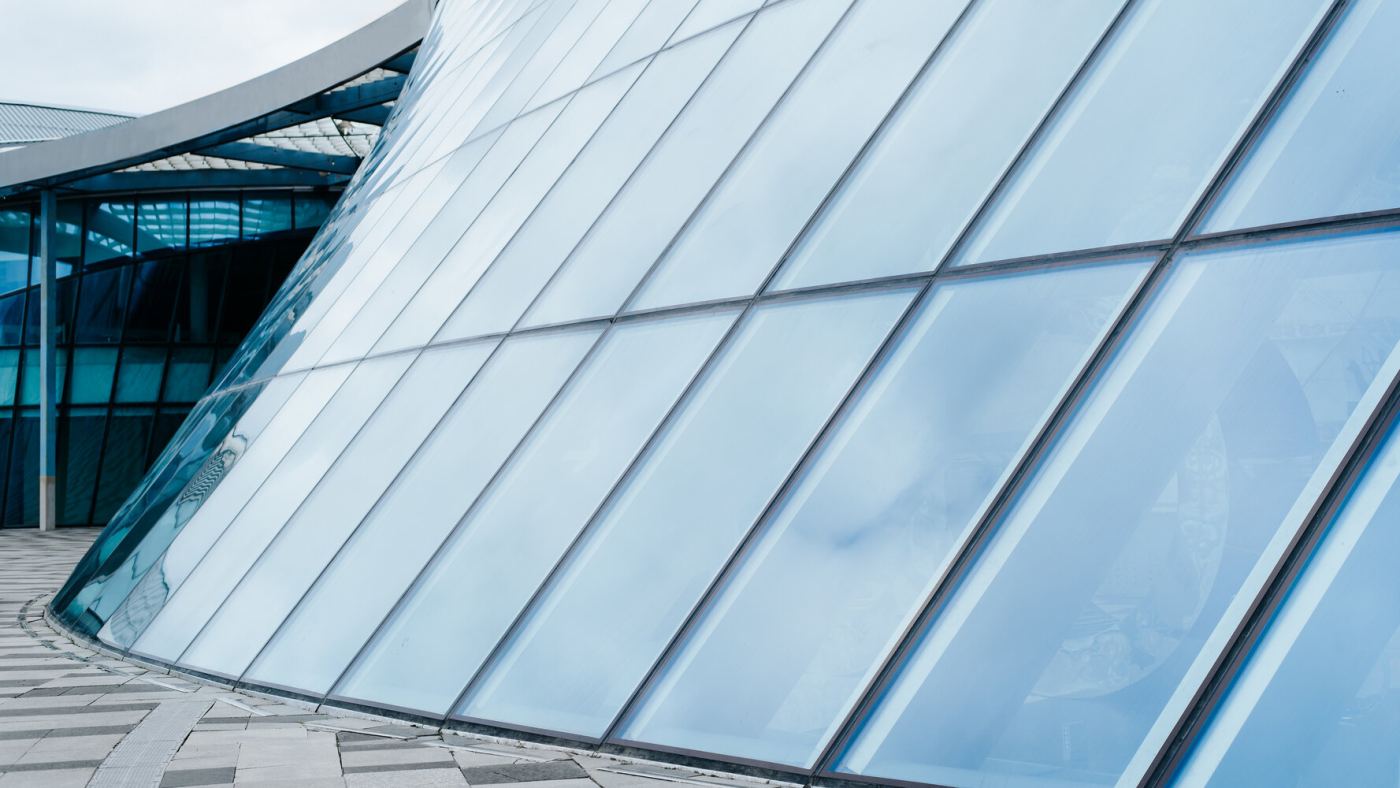
Specialty Glass
Specialty glass represents the evolution of flat glass toward multifunctional systems. No longer a simple transparent barrier, modern glass is an engineered component capable of actively regulating energy flows, ensuring passive safety, and providing acoustic insulation, all while maintaining high luminous transmission properties.
Origin and History
While glass production dates back to ancient Egypt and Phoenicia, the true revolution for modern construction was the Float process, invented by Sir Alastair Pilkington in 1952. This technique, which produces perfectly flat sheets by floating molten glass on a bath of molten tin, laid the groundwork for all subsequent processing. In the 1970s, the energy crisis spurred the development of Low-E (low-emissivity) coatings, while the demand for safety led to the widespread use of Laminated Glass, originally patented by French chemist Édouard Bénédictus in 1909 following a serendipitous laboratory accident.
Types
On-site and during the design phase, three macro-categories are distinguished based on performance:
- Laminated Glass (Anti-shatter): Composed of two or more sheets bonded by a PVB (Polyvinyl Butyral) interlayer. In the event of breakage, fragments adhere to the film, preventing falling debris or intrusion.
- Thermal Control Glass (Insulated Glass Units - IGU): Double or triple-glazing systems separated by a spacer and a cavity filled with noble gases (Argon or Krypton), treated with magnetron-sputtered coatings to reflect heat.
- Acoustic Glass: Specialized laminated glass using acoustic PVB films with damping properties, designed to reduce sound frequencies typical of urban traffic.
- Tempered (Toughened) Glass: Subjected to thermal treatment to increase mechanical and thermal shock resistance; upon failure, it fractures into small, blunt fragments.
Symbolism
- Specialty glass symbolizes the dematerialization of architecture. It represents the transparency of modern societies and the desire to dissolve the boundary between interior and exterior without sacrificing protection.
- It is the emblem of "controlled light": a natural force that is filtered and bent to meet human needs for comfort and safety.
Curiosities
- Selective glass exists, capable of distinguishing between visible light (which it allows to pass) and solar heat (which it reflects), allowing interiors to be illuminated without overheating in summer.
- Furthermore, certain types of glass, known as self-cleaning glass, utilize a titanium dioxide coating that, when activated by UV rays, decomposes organic dirt which is then easily washed away by rainwater.