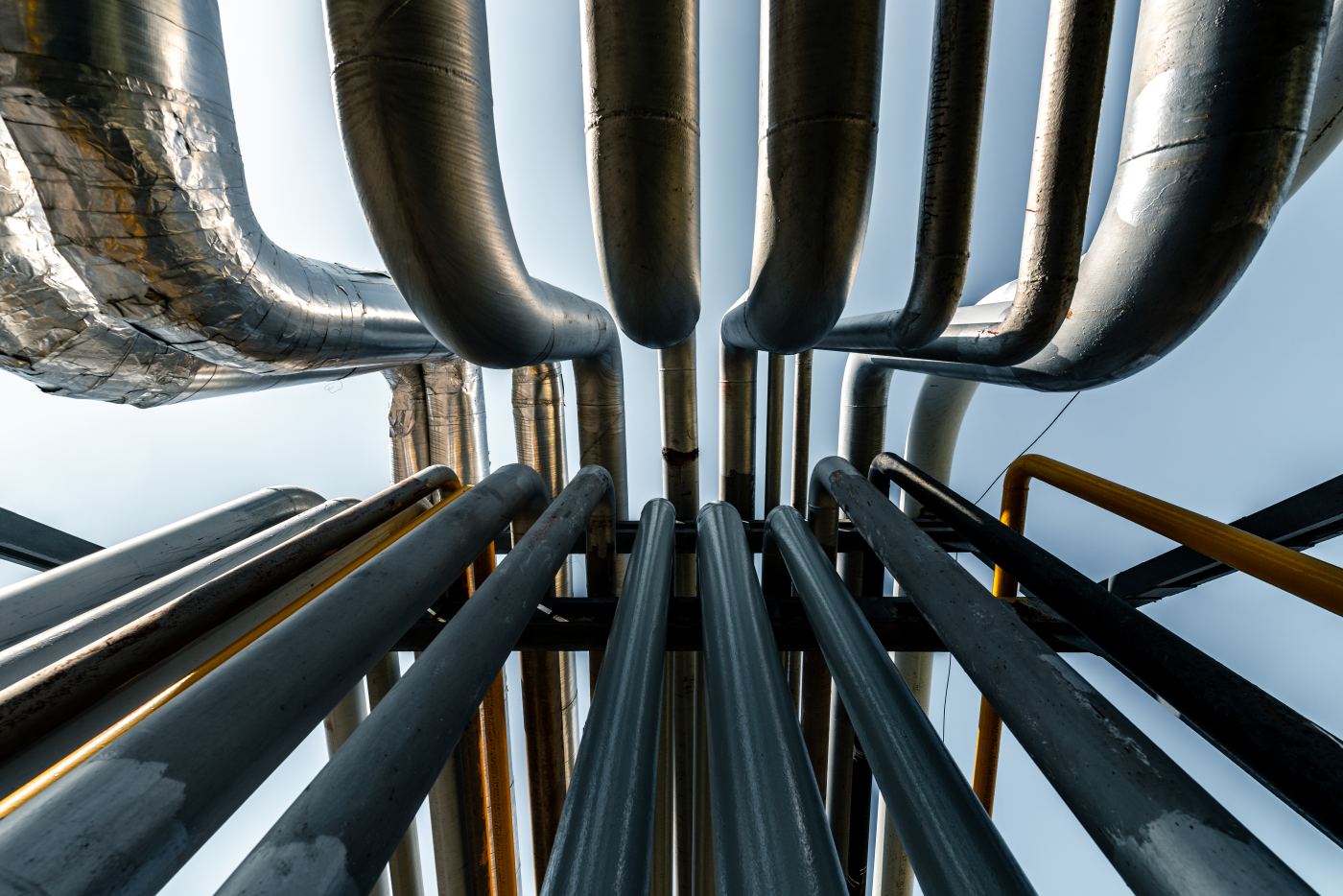
Piping Systems
Piping systems are structural elements with a hollow circular cross-section, designed for the conveyance and distribution of fluids (liquids, gases, or multiphase mixtures) under pressure or via gravity flow. In the construction and infrastructure sectors, piping is not merely a conduit but an integrated system comprising pipes, fittings, valves, and joints, sized to withstand specific mechanical, chemical, and thermal stresses exerted by the heat-transfer or process fluid.
Origin and History
Hydraulic engineering originated with the great Mesopotamian and Egyptian civilizations but reached its pre-industrial peak with the Roman Empire and the invention of fistulae (lead pipes) and masonry aqueducts. The true material revolution occurred in the 19th century with the introduction of ductile iron and welded steel, which allowed for the management of high operating pressures. Following World War II, polymer chemistry introduced plastic materials (PVC, PE, PP), drastically reducing installation costs and permanently solving the issue of electrochemical corrosion in underground networks.
Types
The classification of pipelines follows the physicochemical properties of the materials in relation to operating conditions (PN – Nominal Pressure and DN – Nominal Diameter):
- Metallic Piping (Steel and Copper): Carbon steel, often galvanized, is the standard for fire protection networks and district heating. Copper, due to its bacteriostatic properties and conductivity, remains the material of choice for high-end domestic water distribution.
- Plastic Piping (PVC, PE, PP, PEX): HDPE (High-Density Polyethylene) is the undisputed leader for underground water and gas lines due to its flexibility and electrofusion jointing. PEX (cross-linked polyethylene) is essential for radiant heating systems thanks to its thermal memory.
- Ductile Iron Piping: Predominantly used in infrastructure for large water mains, valued for its extreme resistance to traffic loads and century-long durability.
- Multilayer Systems: Composite pipes (PE-X/Al/PE-X) that combine the advantages of metals (oxygen barrier and low thermal expansion) with those of plastics (lightness and corrosion resistance).
Symbolism
- Piping symbolizes the vital arteries of the building and urban organism.
- It represents invisible efficiency: a complex network that ensures human subsistence by bringing in resources and removing waste.
- It symbolizes the logical connection between source and user, acting as a metaphor for energy flow and the continuity of essential services that define modern civilization.
Interesting Facts
- Proper installation requires the rigorous management of thermal expansion. In extensive systems, it is mandatory to provide "expansion loops" or compensation joints to prevent heat-generated forces from deforming supports or causing fatigue failure.
- A technical curiosity concerns the "water hammer" effect: the abrupt closing of a valve can generate overpressures capable of bursting improperly sized pipes.
- Furthermore, in modern sustainable buildings, drainage pipes are made of sound-insulating materials loaded with minerals to reduce noise pollution within living units.