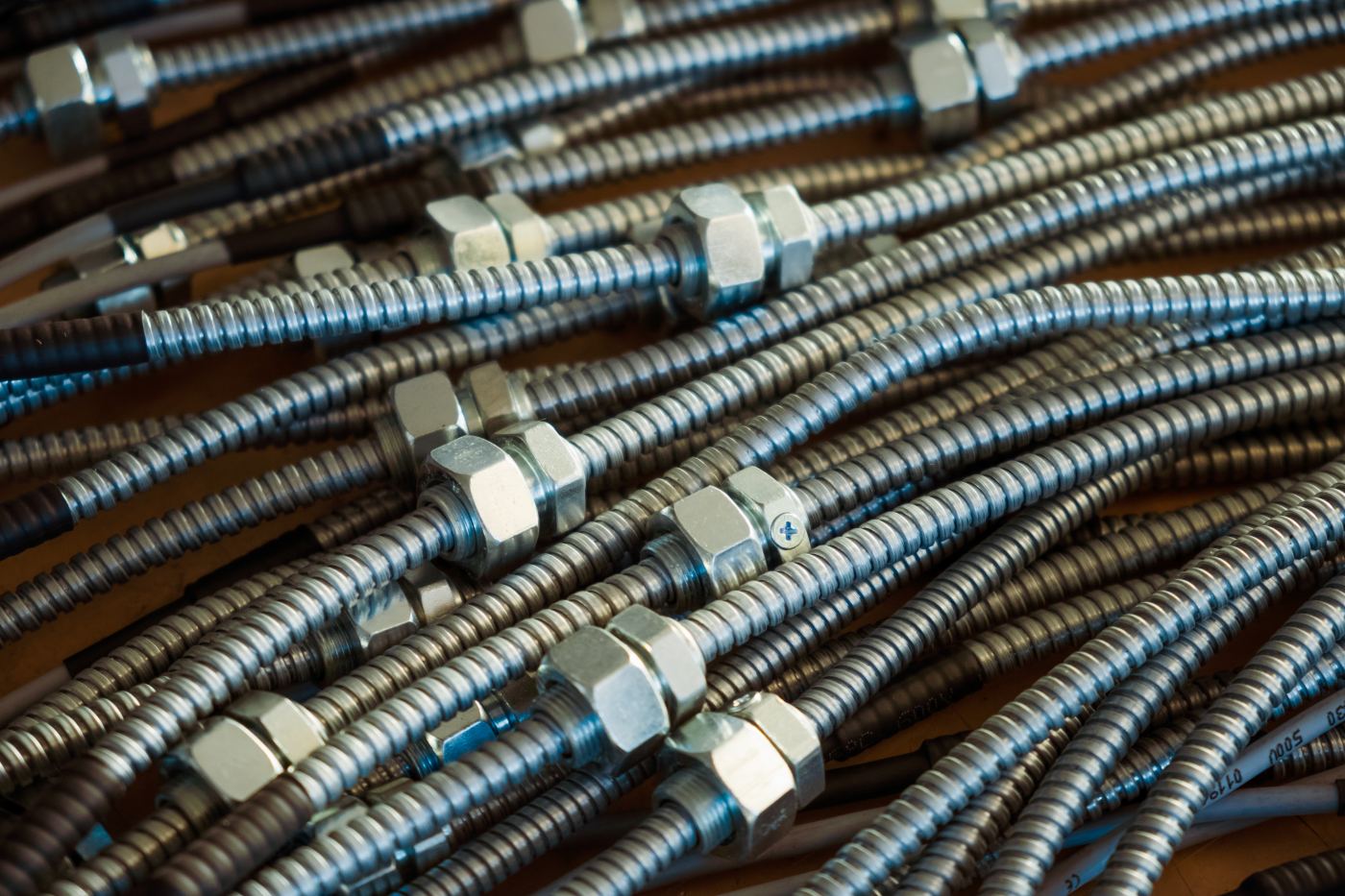
Tie Rods
The tie rod is a linear structural element subjected exclusively to axial tension, designed to absorb and balance horizontal thrusts or to connect distant structural members, ensuring the box-like integrity of the building. In terms of structural mechanics, the tie rod acts as an internal or external constraint that limits displacement degrees of freedom, countering wall overturning phenomena or the opening of kinematic chains in vaulted structures.
Origin and History
The use of tie rods, or "chains," has deep roots in Gothic and Renaissance architecture, where wrought iron ties were employed to counteract the lateral thrusts of arches and domes. A masterful example is the use of metal chains in Brunelleschi's Dome in Florence. With the Industrial Revolution and the birth of metal carpentry, the tie rod evolved into high-strength steel bars and spiral cables. Today, consolidation engineering utilizes composite materials such as fiber-reinforced polymers (FRP), which offer an unparalleled strength-to-weight ratio and extremely high corrosion resistance.
Types
The classification of tie rods varies based on the tensioning technology and the material nature:
- Passive Tie Rods (Chains): These become active only when the structure undergoes deformation. They are typical of historical restorations, consisting of steel bars with plate or "paletto" (anchor) end blocks.
- Active Tie Rods (Prestressed): These are mechanically tensioned during installation using hydraulic jacks or turnbuckles. This allows for the application of precompression to the structure, immediately improving its stability.
- Harmonic Steel Tie Rods: Cables or strands used in civil engineering structures (stayed bridges) and large roofs, capable of withstanding extremely high tensile loads.
- Carbon Fiber Tie Rods (FRP/SRP): Laminates or fabrics applied superficially or inserted into grooves, used for "non-invasive" structural reinforcement due to their millimetric thickness.
Symbolism
- The tie rod symbolizes union and cohesion. It represents the invisible force that holds distant parts together, preventing the disintegration of the system.
- In architecture, it is the emblem of the balance of forces: the ability to transform a destructive thrust into governed tension.
- It symbolizes resilience and safety, acting as an "anchor" that protects the building from seismic actions and structural decay.
Curiosities
- A critical phase in the installation of tie rods is the injection of cement grout or epoxy resins into the borehole (in the case of tie rods injected into the ground or masonry), necessary to ensure bond and protection against oxidation.
- A technical curiosity concerns the "sound" of tie rods: in cable-stayed bridges, cable tension is monitored through the analysis of vibration frequencies, as if they were strings of a musical instrument.
- Furthermore, in prestigious restorations, the anchor plates are often custom-designed to integrate structural function with the architectural decoration of the façade.