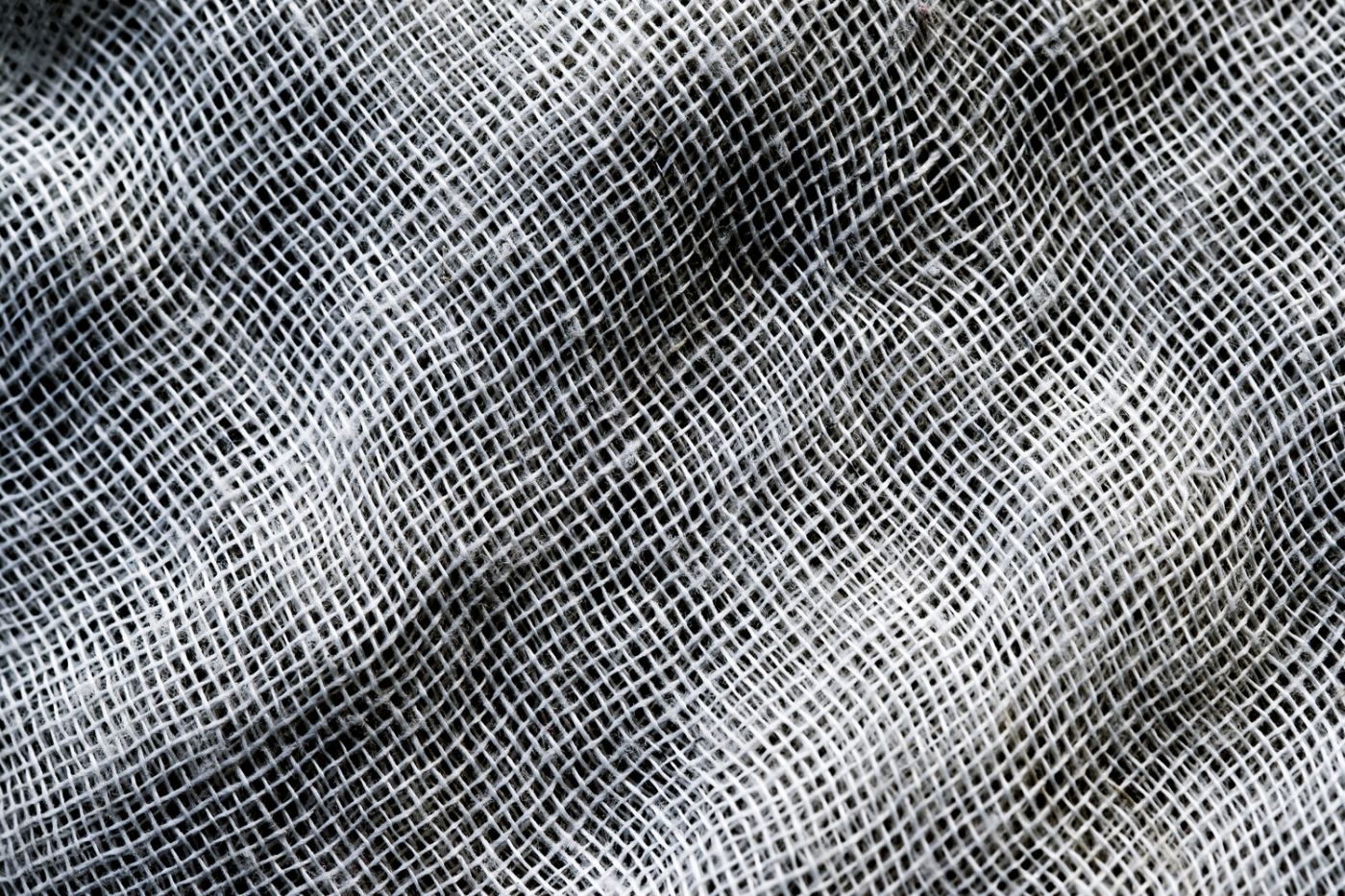
Fiberglass Fabric
Fiberglass fabric, technically classified as glass-fiber reinforcement mesh, is a composite material obtained by spinning molten glass into filaments with micrometric diameters. In the construction sector, this material serves as a resilient "core" for cementitious matrices and resins, performing the critical function of stress distribution and mitigation of cracking phenomena.
Origin and History
Although glass manipulation dates back to antiquity, the industrial production of continuous glass fibers was a milestone of the first half of the 20th century (1930s), thanks to Games Slayter's patents for Owens-Corning. Initially used as thermal insulation, fiberglass revolutionized the construction industry in the 1970s and 1980s with the introduction of alkali-resistant (AR) treatments. Prior to this innovation, the alkalinity of cement rapidly degraded the fibers; the addition of zirconium dioxide allowed fiberglass to become the standard reinforcement for plasters, External Thermal Insulation Composite Systems (ETICS), and structural restoration, replacing heavy and oxidizable metal meshes in many application fields.
Types
Fabrics differ based on the weaving method and surface chemical treatment:
- Meshes for ETICS Systems (Thermal Insulation): Characterized by a defined grid and an alkali-resistant primer treatment. They are designed to absorb thermal stresses and prevent hairline cracking in the base coat layer.
- Bidirectional and Axial Fabrics: Fibers interwoven at 0° and 90° (warp and weft) to provide uniform strength. They are used for reinforcing vaults, arches, and masonry structures subject to seismic loads.
- Fiber Reinforced Cementitious Matrix (FRCM): Advanced systems where high-grammage fiberglass fabric is paired with cement-based or lime-based mortars for the structural consolidation of historical buildings.
- Felt Fabrics (Mat): Composed of randomly arranged fibers, ideal for waterproofing coupled with liquid resins, where isotropy of mechanical properties is required.
Symbolism
- On the construction site, fiberglass fabric symbolizes invisible cohesion. It represents the capacity of modern technology to provide "sinews" to fragile materials such as mortar or concrete.
- A roll of fiberglass mesh on-site is synonymous with workmanship according to the "rule of art": it indicates that the contractor is actively preventing future aesthetic and structural defects.
- It is the symbol of the transition toward lightweight construction, where strength is not provided by mass, but by the intrinsic quality of the bond between fiber and matrix.
Interesting Facts
- One of the most significant innovations is fiberglass mesh with shape memory, capable of adapting to complex curved surfaces without creating creases that would compromise mortar adhesion.
- Furthermore, there are fabrics "primed" with graphene or metallic particles to shield buildings from electromagnetic waves (RF shielding).
- In the heritage restoration sector, the use of pre-formed fiberglass connectors allows for the "stitching" of damaged walls without adding significant weight to the structure, ensuring superior mechanical compatibility compared to steel due to an elastic modulus closer to that of traditional masonry substrates.