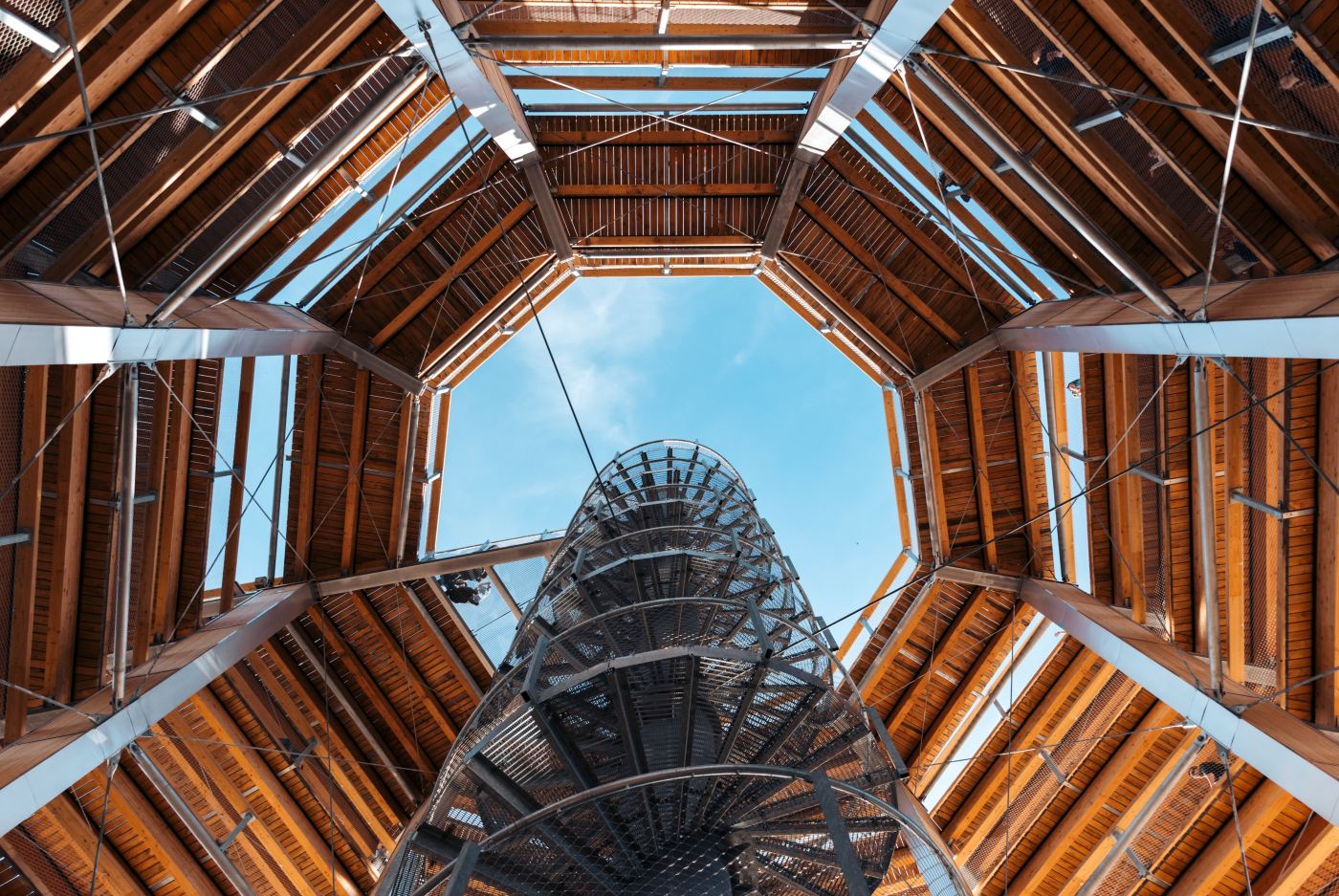
Load-bearing structure
The set of elements that hold the building up: foundations, columns, beams, floors, load-bearing walls. It is the part seen bare on site, before infill walls and finishes hide it.
The load-bearing structure is the primary assembly of elements in a building or civil engineering work designed to support various loads and transfer them safely to the ground. It consists of components such as columns, beams, load-bearing walls, and floor slabs, which function as an integrated system to ensure the stability and safety of the entire edifice. The choice of materials varies between reinforced concrete, structural steel, timber, or masonry, depending on the specific project requirements and site conditions. Structural design is critical, as it must resist both static loads, such as dead weight, and dynamic loads, including wind, vibrations, or seismic activity. Modern structural analysis, often utilizing sophisticated finite element software, is essential to ensure the assembly can withstand all anticipated stresses without the risk of collapse or excessive deflection.
Origin and History
The earliest load-bearing systems date back to antiquity, utilizing natural materials like stone and timber in post-and-lintel or arched configurations. Over centuries, the introduction of industrial materials such as structural steel and reinforced concrete revolutionized construction methods, enabling the creation of taller, more complex, and more resilient structures. This evolution marked the transition from empirical building techniques to modern structural engineering.
Types
Load-bearing systems are categorized based on their primary construction technology:
- Reinforced Concrete Structures: Offering high durability and fire resistance, these are the standard for most modern residential and commercial buildings.
- Steel Frames: Known for their exceptional strength-to-weight ratio and flexibility, they allow for rapid assembly and large open spans.
- Mass Timber and Glulam Systems: Sustainable alternatives that provide excellent seismic performance due to their natural elasticity and light weight.
- Load-Bearing Masonry: A traditional system where walls act as both the building envelope and the structural support, common in historical and residential architecture.
Symbolism
- The load-bearing structure serves as a symbol of solidity and fundamental safety.
- It represents the integrity and reliability of a building, as well as the continuous evolution of material science and engineering logic.
- It is the literal and metaphorical foundation upon which all other architectural elements reside.
Interesting Facts
- The emergence of reinforced concrete in the late 19th century fundamentally altered modern architecture, allowing for the separation of the structure from the skin.
- Regular maintenance and structural health monitoring are vital for ensuring longevity, especially in harsh environments.
- Today, advanced non-linear analysis helps engineers design buildings capable of resisting complex environmental stresses, such as high-velocity winds and intense seismic events, through energy dissipation and structural redundancy.