Masonry
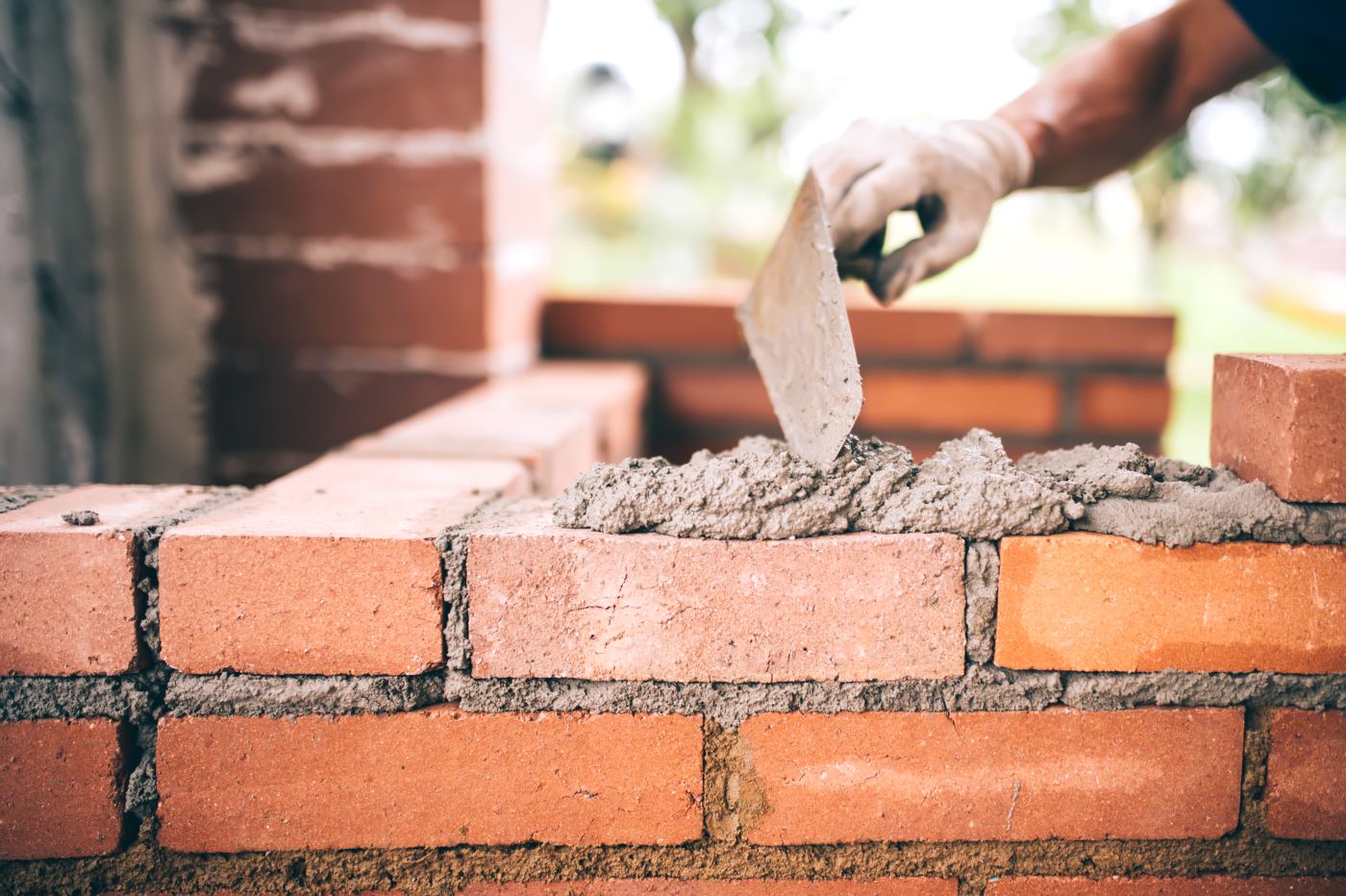
Walls built of bricks, blocks or stone bonded with mortar. In traditional houses it carries the building; in reinforced concrete frames it fills the gaps between columns without carrying load.
Masonry is a heterogeneous and anisotropic construction system, composed of the assembly of resistant elements (natural or artificial units) bonded together by a connecting layer, typically cement or lime mortar. In static terms, masonry operates primarily under compression, utilizing friction and binder cohesion to transmit vertical and horizontal loads to the foundations. Its efficiency depends on the "standards of workmanship," specifically the correct arrangement of joints and the interlocking of units.
Origin and History
The evolution of masonry marks the transition from dry-stone systems (opus siliceum) to cementitious ones. While the Egyptians used squared stone with millimeter tolerances, it was the Romans who revolutionized the field with Opus Caementicium, a core of pozzolanic mortar and stone fragments enclosed between brick facings (opus testaceum). This innovation allowed for the creation of vaulted structures of unprecedented scale. During the Middle Ages and the Renaissance, masonry was refined in "rubble-fill" textures, eventually leading to the modern era where the introduction of cellular clay bricks and autoclaved aerated concrete blocks integrated load-bearing capacity with thermal insulation.
Types
Masonry is classified based on its static function and texture:
- Load-Bearing Masonry (Structural): Designed to absorb gravitational loads and seismic stresses. It must comply with regulatory minimum thicknesses and unit void percentages (< or = 45%).
- Infill Masonry: Used in framed systems (R.C. or steel) to close the building envelope. It has no load-bearing function but contributes to overall structural stiffness.
- Reinforced Masonry: Characterized by the insertion of horizontal and vertical steel bars within the joints or specific voids to provide ductility and tensile strength.
- Fair-faced vs. Plastered Masonry: The former requires expert joint sealing for aesthetic and protective purposes; the latter utilizes a sacrificial layer (plaster/stucco) for protection against atmospheric agents.
Symbolism
- Masonry is the primordial symbol of "building". It represents the stratification of knowledge, where each course of bricks rests solidly on the previous one.
- It embodies values of stability, protection, and permanence over time.
- In architectural language, masonry expresses the link between terrestrial matter (clay, lime, stone) and human rationality, symbolizing a secure barrier between anthropized space and the external environment.
Interesting Facts
- Correctly executed masonry must feature staggered joints: vertical alignment of joints (stack bond) is a major technical error that creates preferential failure planes.
- A technical curiosity concerns the "curing" of the mortar: the final strength of the masonry is not immediate but grows with the carbonation of the binder.
- Furthermore, in historic restorations, Natural Hydraulic Lime (NHL) mortar is used, as modern cement mortars, being too rigid and impermeable, could cause accelerated degradation of ancient stones due to chemical-physical incompatibility.
- Origin
- Roman Era (refinement of binders and facings)
- Category
- Assembled element construction systems
- Function
- Load-bearing (statics), environmental separation, compartmentation
- Presence on Construction Sites
- Envelope and partitions