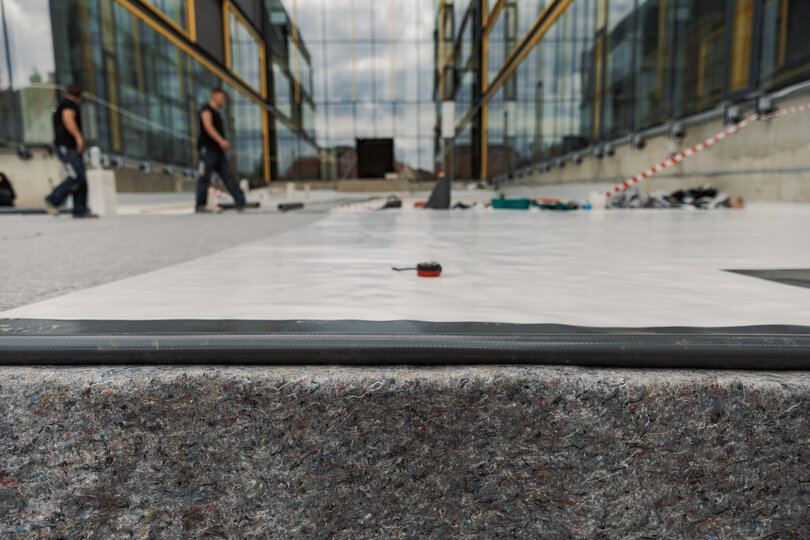
Waterproofing Membranes
Waterproofing membranes are polymeric or bituminous barriers designed to ensure the hygroscopic integrity of structures by preventing the passage of water in liquid or vapor form. These systems are not merely coatings, but functional shields applied to the extrados or intrados of surfaces to counteract hydrostatic pressure, meteoric infiltration, and capillary rising damp.
Origin and History
The hydraulic protection of buildings has millennial roots, from the use of natural bitumen in Mesopotamia to the vegetable resins of classical antiquity. However, modern waterproofing was born with the industrialization of petroleum in the 19th century and the production of the first "bituminous felts." The true technological revolution occurred in the 1960s and 70s with the introduction of elastomeric (SBS) and plastomeric (APP) polymers. These allowed for the modification of distilled bitumen, making it flexible at low temperatures and resistant to UV rays. Subsequently, materials science introduced synthetic membranes (PVC, TPO, EPDM), shifting the focus toward high-performance, single-ply mechanical solutions.
Types
The classification of membranes is based on the chemical nature of the binder and the internal reinforcement:
- Polymer-Modified Bituminous Membranes: Composed of a mixture of bitumen and polymers (APP for heat resistance, SBS for elasticity), reinforced with non-woven polyester fabric. They are the most common choice for flat roofs and foundations due to their robustness and ease of torch-on application.
- PVC-P Synthetic Membranes: Plasticized polyvinyl chloride membranes, extremely versatile and resistant to puncturing. They are frequently used in underground structures or reservoirs due to their excellent chemical stability.
- EPDM Membranes: Based on vulcanized synthetic rubber, they offer a service life exceeding 50 years and extreme resistance to thermal shock, remaining elastic even at -45°C.
- Liquid Systems (Polyurethanes and PMMA): Cold-applied, they create a seamless (monolithic) membrane, ideal for complex geometries where the welding of prefabricated membranes would be problematic.
Symbolism
- On a high-standard construction site, the waterproofing membrane symbolizes long-term preservation.
- It represents the invisible line between durability and decay; an error in the selection or installation of the waterproofing system can compromise the entire stability of the building due to the corrosion of steel reinforcement or the carbonation of the concrete.
- It is the element that transforms a raw structure into a healthy environment, embodying the concept of the "protective skin" of architecture that dialogues with the most hostile environmental conditions.
Interesting Facts
- One of the most interesting frontiers is represented by "Self-Healing" membranes, designed to autonomously seal small accidental punctures through reactive polymers.
- In the sustainability sector, reflective membranes (Cool Roofs) are becoming widespread, characterized by a high Solar Reflectance Index (SRI) that reduces the thermal load of buildings in summer.
- Furthermore, bentonite geotextile technology utilizes natural clay which, upon contact with water, expands to create a sealing waterproof gel, leveraging an elementary but extremely effective chemical-physical reaction for foundations below the water table.