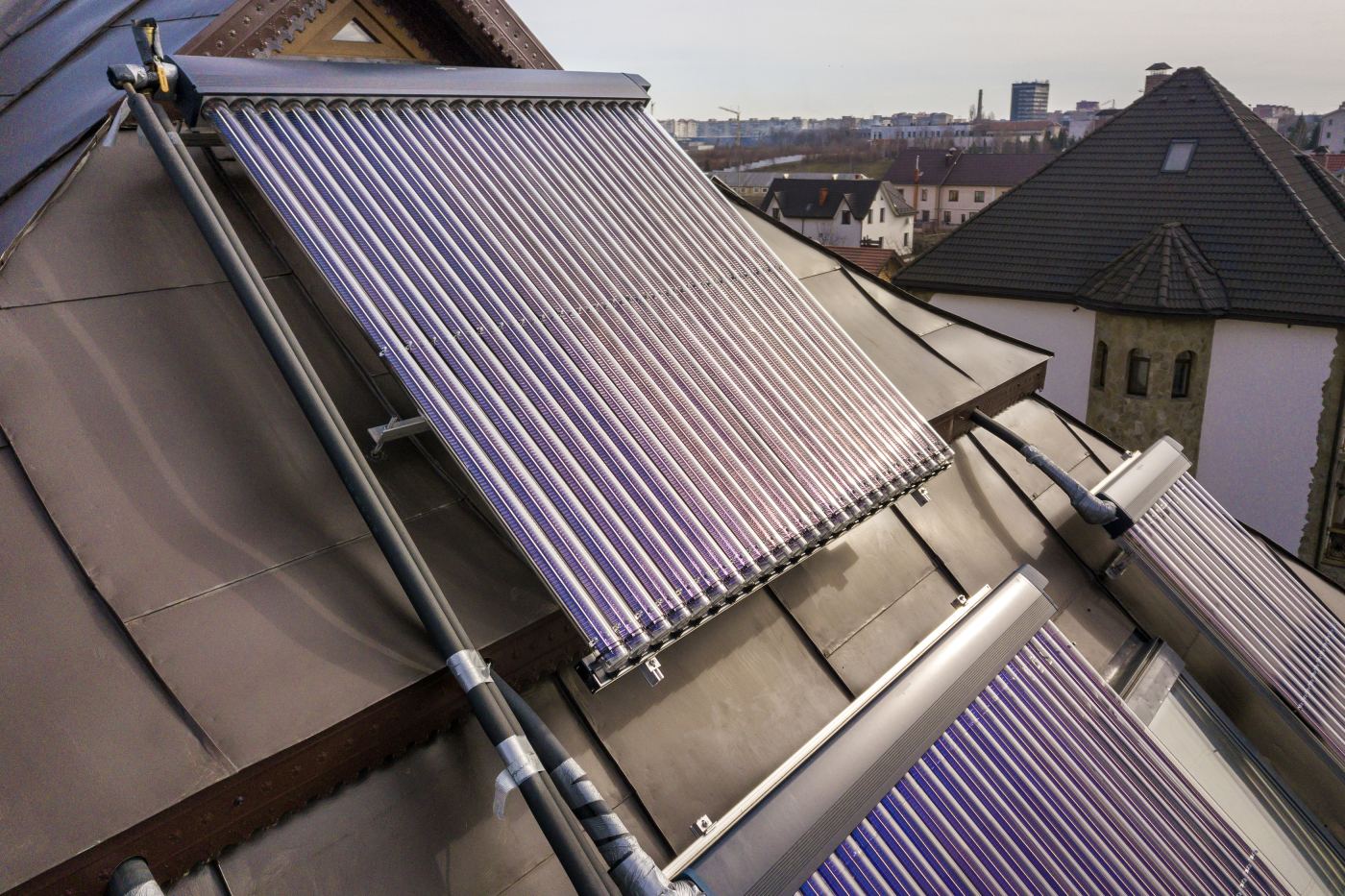
Solar Thermal Systems
Solar thermal systems are technologies that utilize solar energy to heat water or other fluids. They are composed of solar collectors, insulated piping, and thermal storage tanks. Solar thermal systems are used for Domestic Hot Water (DHW) production, space heating, and industrial applications, reducing conventional energy consumption and contributing to environmental sustainability.
Solar thermal represents the most efficient technology for the direct conversion of solar energy into thermal energy, optimizing the energy balance of buildings through the exploitation of latent and sensible heat.
Origin and History
The use of solar heat for heating fluids has ancient roots, but its modern technical application began in the late 19th century in the United States with the first patents for sun-exposed tanks. However, it was during the 1970s oil crisis that engineering research perfected the "flat-plate collector," introducing selective materials to maximize absorption. In Italy, its mass adoption is linked to the evolution of energy-saving regulations (such as Law 10/91 and subsequent decrees), which established solar thermal as a pillar for Domestic Hot Water (DHW) production, especially in Mediterranean climates.
Types
The classification of solar thermal systems is based on the physical principle of circulation and the technology of the solar harvester:
- Natural Circulation: The heat transfer fluid moves via gravity due to the density difference between hot and cold fluid. The storage tank is positioned above the collector; it is a compact solution that does not require pumps.
- Forced Circulation: The movement of the fluid is managed by a control unit and a pump (circulator). This allows the tank to be placed anywhere, typically in the technical room, ensuring lower thermal dispersion.
- Glazed Flat-Plate Collectors: These consist of an absorber plate contained in an insulated casing and covered by tempered glass. They represent the standard for residential use.
- Evacuated Tube Collectors: These utilize glass tubes in which a vacuum is created to eliminate convection losses, offering extremely high yields even in harsh climates or for high-temperature industrial applications.
Symbolism
- In technical architecture, solar thermal symbolizes the elementary balance between water and fire (the sun).
- It represents independence from fossil fuel combustion for primary human needs, such as hygiene and thermal comfort.
- The presence of collectors on roof slopes is a visual signal of a building that does not merely consume resources but interacts with natural cycles to regenerate its own requirements, embodying the concept of sustainable "urban metabolism."
Intersting Facts
- Unlike photovoltaics, which has an average efficiency of 20%, a solar thermal collector can boast a conversion efficiency exceeding 80%. This means that nearly all the energy hitting the panel is transformed into heat.
- Another technical peculiarity involves "Drain-back" systems: designed to automatically empty the collectors when the pump stops, eliminating the risks of winter freezing or fluid stagnation (boiling) during periods of summer inactivity.