Photovoltaic Systems
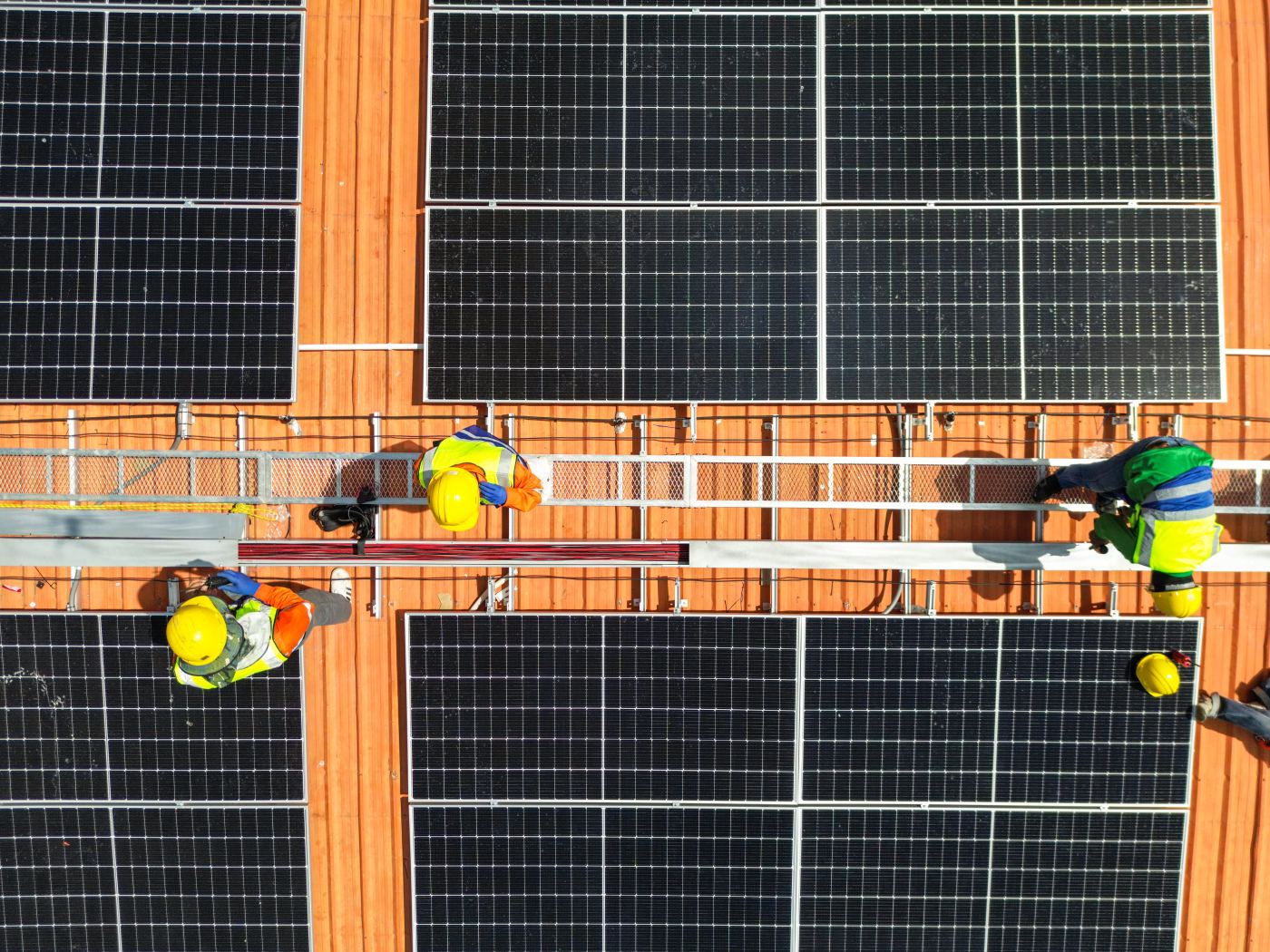
Photovoltaic systems are systems that use solar cells to convert sunlight into electrical energy. They can be integrated onto building roofs or installed on land to produce renewable energy for domestic, commercial, or industrial use. Photovoltaic systems contribute to the reduction of carbon emissions and long-term energy costs by exploiting a clean and inexhaustible energy source: they thus represent the cornerstone of the energy transition in modern construction, transforming the building...
Photovoltaic systems are systems that use solar cells to convert sunlight into electrical energy. They can be integrated onto building roofs or installed on land to produce renewable energy for domestic, commercial, or industrial use. Photovoltaic systems contribute to the reduction of carbon emissions and long-term energy costs by exploiting a clean and inexhaustible energy source: they thus represent the cornerstone of the energy transition in modern construction, transforming the building envelope from a passive component into an active generator of energy flows.
Origin and History
The scientific foundations date back to the discovery of the photovoltaic effect by Alexandre Edmond Becquerel in 1839, but the first silicon solar cell with significant efficiency was only developed in 1954 at Bell Laboratories. Initially confined to the aerospace sector for powering satellites, the technology has undergone massive democratization since the 2000s. In Italy, the decisive push came with the "Conto Energia" decrees, which transformed photovoltaics from an experimental solution into a standard component of building practice, incentivizing Building Integrated Photovoltaics (BIPV).
Types
Systems are classified by electrical configuration and installation methods:
- Grid-connected: Systems connected to the national power grid for net metering or the sale of surplus energy.
- Stand-alone (Off-grid): Isolated systems equipped with electrochemical storage systems, ideal for areas not reached by the grid.
- Total Integration (BIPV): Modules replace structural elements (photovoltaic tiles, glass curtain walls), performing both the generation and the waterproofing functions.
- Partial Integration: Installation over the existing roofing through support structures made of aluminum or stainless steel.
Symbolism
- In the architectural field, photovoltaics symbolize energy autarky and the client's environmental responsibility.
- While it was once perceived as a "foreign body" that marred the aesthetics, it has today become a hallmark of modernity and property value.
- The silicon cell, with its characteristic deep blue or charcoal black coloring, represents the union between a natural resource (the sun) and technological innovation, visually communicating a commitment to sustainability and decarbonization.
Interesting Facts
- A technical aspect often underestimated is the influence of the temperature coefficient: photovoltaic cells lose efficiency as heat increases. For this reason, integration on ventilated roofs is optimal, as the underlying airflow helps dissipate the modules' heat, keeping the silicon at lower operating temperatures.
- Furthermore, current research is focusing on perovskite cells, which promise to exceed the theoretical limits of silicon, offering flexible and semi-transparent modules applicable even to windows.