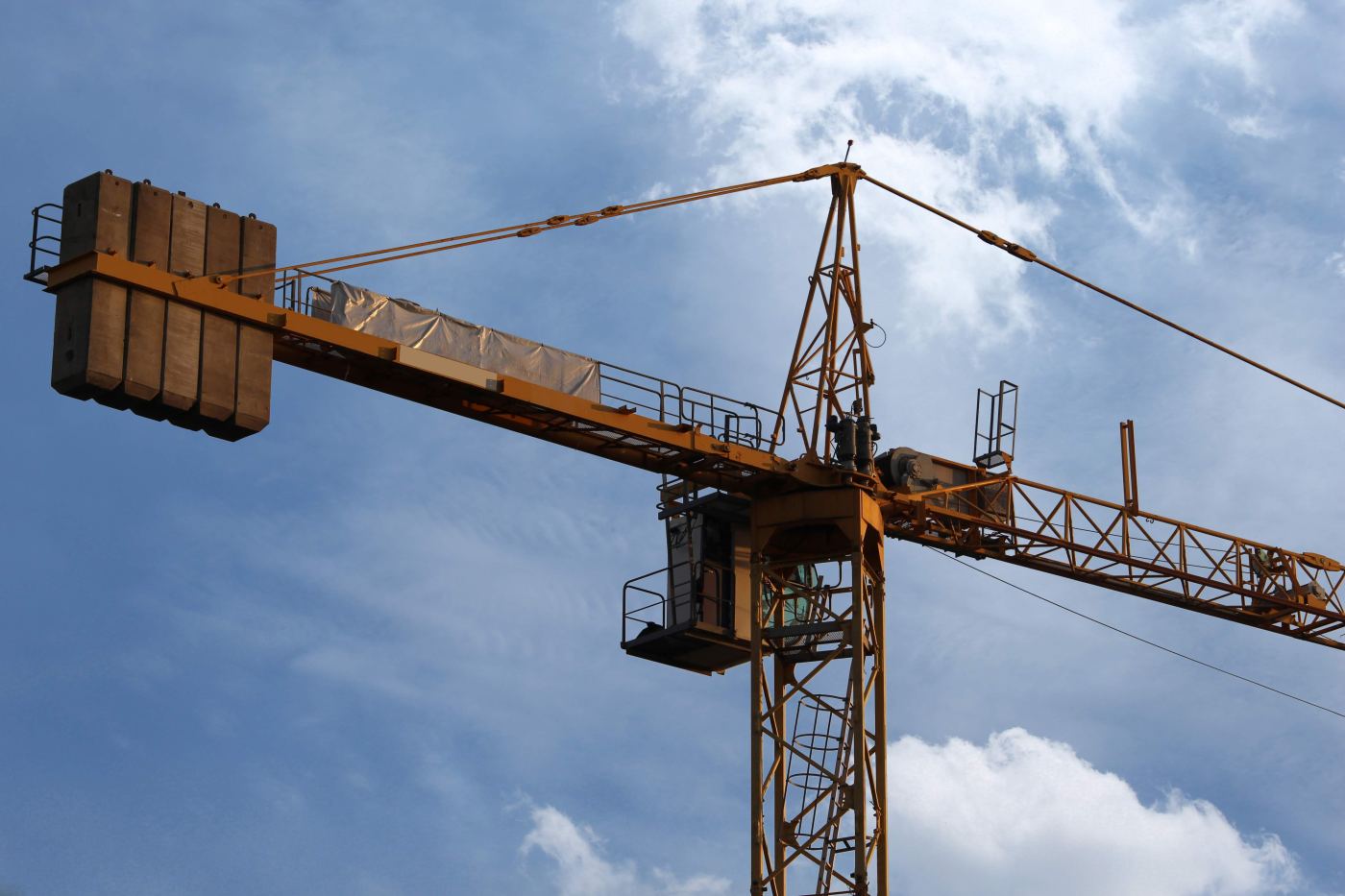
Tower crane
The fixed crane that towers over the site. It arrives in pieces, is assembled section by section and can grow with the building. It lifts formwork, reinforcement and materials; the operator sits in the cab at the top or drives it from the ground by remote control.
A tower crane is a lifting machine used on construction sites to move heavy materials vertically and horizontally across large areas. It is one of the most recognizable elements of urban construction due to its tall vertical mast and long rotating jib. It is used to lift concrete, steel components, prefabricated elements, and equipment with precision and safety.
Origin and History
Modern cranes developed between the 19th and 20th centuries alongside mechanical engineering advancements and electrification.
The tower crane in its contemporary form became widespread after World War II, driven by rapid urban expansion and high-rise construction. Technological progress has led to taller, modular, and more efficient models.
Types
Common tower crane configurations include:
- Top-slewing tower cranes: the upper part rotates above the mast; widely used in large projects.
- Bottom-slewing tower cranes: rotation occurs at the base.
- Fast-erecting cranes: suitable for small to medium sites.
- Self-erecting cranes: ideal for residential projects and renovations.
Symbolism
- In construction environments, the tower crane symbolizes urban growth, technical capability, operational coordination, vertical progress
- It visually represents development and transformation.
Interesting Facts
- Large models can exceed 100 meters in height.
- They are tied to the building structure as construction progresses.
- Operators may work from a high cabin or control the crane remotely.
- Assembly and dismantling require specialized crews and strict safety procedures.