Cranes
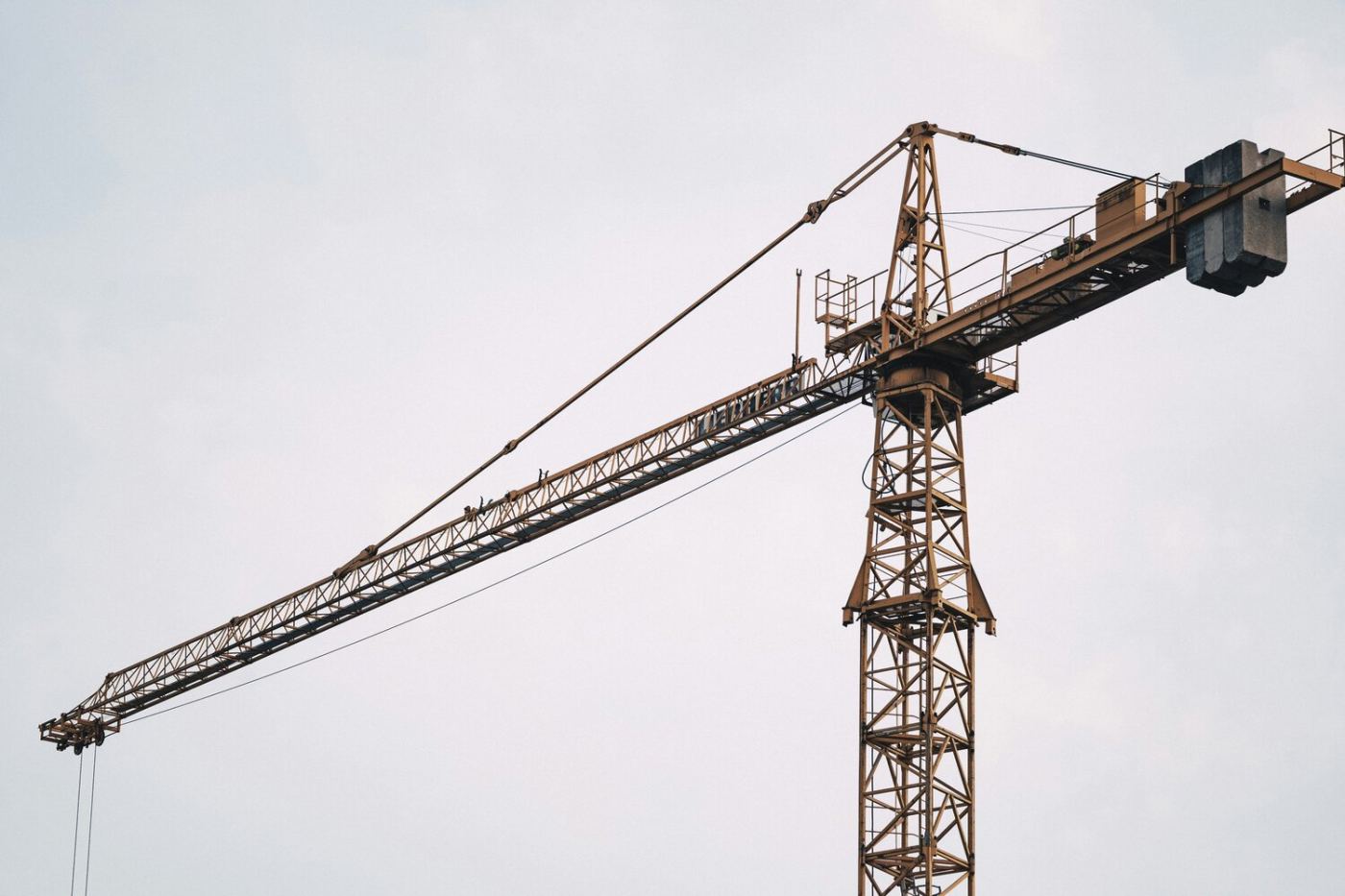
A crane is an operating machine designed for lifting and moving loads in space, using a hook or other gripping devices suspended by ropes or chains. Based on the physical principle of the lever and the mechanical advantage provided by pulleys and winches, the crane is the operational heart of every construction site. It determines productivity and governs the logistics of material flow between the ground and elevated levels.
Origin and History
The ancestor of the modern crane is the Greek trispastos (6th century BC), a three-pulley structure that allowed a single person to lift immense weights. The Romans perfected the technology with the polyspastos and the "treadwheel" (magna rota), a large wheel powered by human weight to lift blocks for monumental structures. The true revolution came with the Industrial Revolution: in 1838, industrialist William Armstrong designed the first hydraulic crane. However, the modern tower crane, an icon of urban skylines, appeared only in 1949, when Hans Liebherr patented the first mobile, self-erecting tower crane, enabling the rapid reconstruction of European cities after the war.
Types
In construction settings, cranes are classified based on mobility and boom geometry:
- Tower Cranes: Fixed to the ground or a foundation (footing), this is the standard configuration for civil construction. They are divided into top-slewing or bottom-slewing cranes and can reach significant heights through telescoping systems.
- Luffing Jib Cranes: Designed for tight sites or areas with many obstacles, where the jib can tilt almost vertically to avoid interference with adjacent buildings or other cranes.
- Mobile and Crawler Cranes: Machines equipped with telescopic or lattice booms, used for rapid intervention, exceptional lifts, or on unprepared terrain where high load capacity and mobility are required.
- Overhead Cranes: Typical of precast workshops and industrial sites, they run on parallel rails to cover a specific rectangular area.
Symbolism
- The crane symbolizes human ambition and economic growth. It is an emblem of progress and territorial transformation: the presence of cranes on the horizon is universally interpreted as a sign of a city's vitality.
- It represents the force that defies gravity and the millimeter precision required to assemble a complex work. It is, metaphorically, the architect's "right arm," the tool that makes a design tangible.
Interesting Facts
- Anemometers and Safety: Every tower crane is equipped with an anemometer at the top. If wind speeds exceed a critical threshold (usually 72 km/h), the crane must be put in "weathervane" mode: the slewing brakes are released to allow the jib to swing freely with the wind, minimizing resistance and the risk of overturning.
- The Counterweight Balance: Many do not realize that a crane's stability depends not only on the base but on the concrete counterweights placed on the counter-jib, calculated to balance the bending moment generated by the load at the jib's tip.
- Origin
- Antiquity (Greece and Rome); modern tower crane (1949, Liebherr)
- Category
- Lifting and transport equipment
- Function
- Vertical and horizontal movement of heavy loads
- Presence on Construction Sites
- Concrete pouring, rebar placement, formwork handling, precast assembly