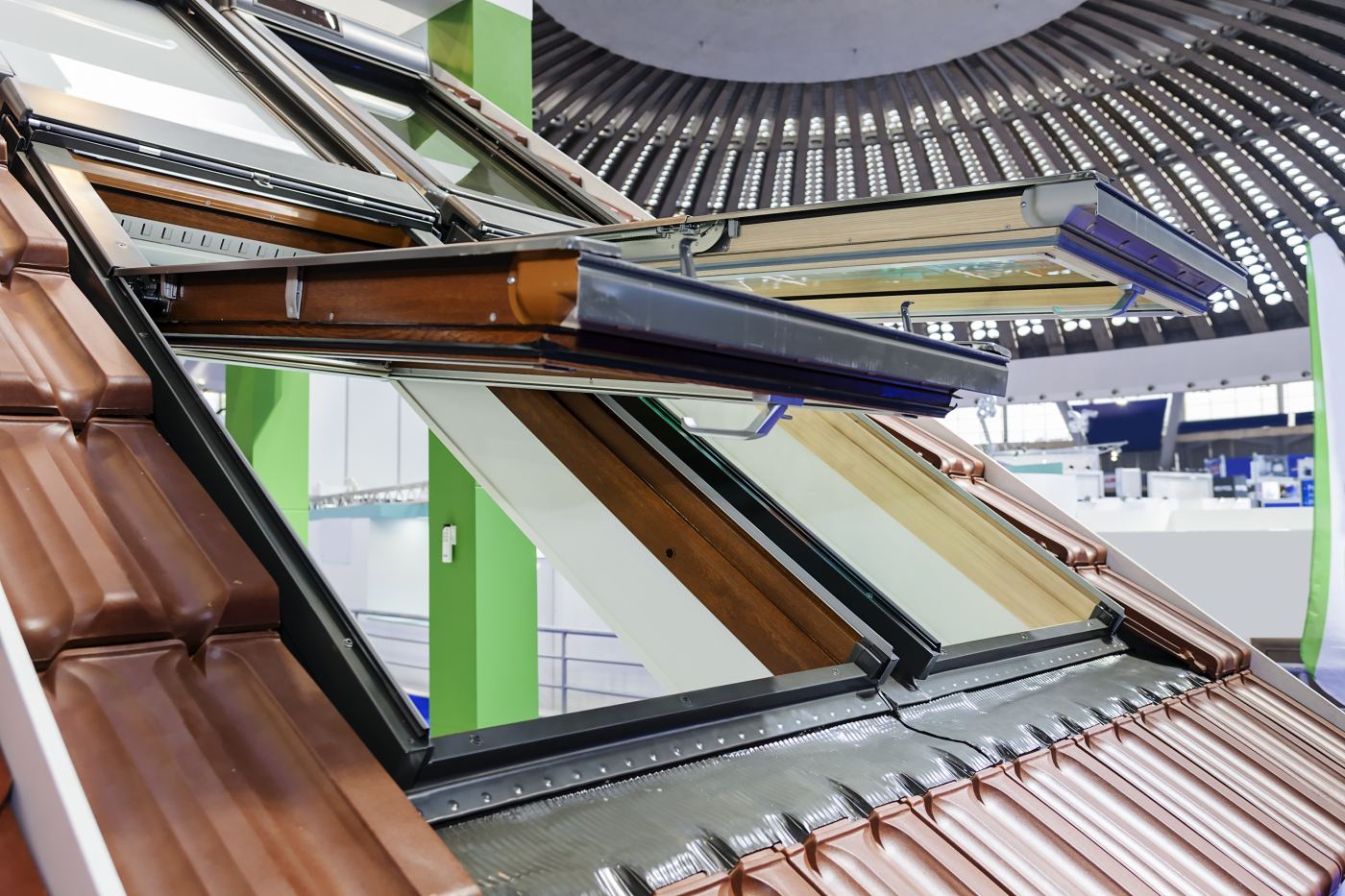
Roof Windows
The integration of roof windows represents one of the most stimulating technical challenges of the building envelope, transforming opaque surfaces into dynamic portals for natural lighting and ventilation.
Origin and History
The need to illuminate attic spaces dates back to vernacular architecture, where small dormers or "glass tiles" were used to light lofts and barns. However, the true revolution occurred after World War II, driven by the need to reclaim attic volumes for residential use due to urban densification. The patent for the first modern roof window (attributed to Villum Kann Rasmussen in 1941) introduced the concept of the center-pivot hinge. This allowed for an installation coplanar to the roof pitch that guaranteed, for the first time, an airtight seal against atmospheric agents and simplified maintenance management.
Types
Roof windows are classified based on their opening system and thermo-acoustic performance:
- Center-Pivot: The most widespread type, characterized by a central hinge that allows the sash to rotate. It is ideal for optimizing internal space.
- Top-Hung (or Dual Opening): This allows the window to open outward via upper hinges, providing an unobstructed view and greater livability near the opening.
- Flat Roof Windows: Dome or flat-glass systems equipped with raised curbs to ensure the correct runoff of rainwater.
- Balcony Windows: Integrated systems that, through the combined opening of two sashes, create a small walkable outdoor space.
Symbolism
- In architecture, the roof window represents the vertical contact between the individual and the cosmos.
- While the vertical window connects the inhabitant with the social and urban context (the horizon), the zenithal opening elevates the gaze toward the sky, symbolizing purity and introspection.
- Zenithal light is technically defined as "diffuse zenithal light" and is often used in museum and sacred settings for its ability to enhance volumes without the shadow distortions typical of lateral light.
Interesting Facts
- A roof window, with the same glazed surface area, guarantees up to twice the brightness of a traditional vertical window: this happens because it directly intercepts the celestial vault, minimizing obstructions from surrounding buildings.
- Furthermore, modern smart windows are equipped with piezoelectric rain sensors: at the first impact of droplets on the surface, the home automation system automatically triggers the closing motor to preserve the integrity of the interiors