Excavator
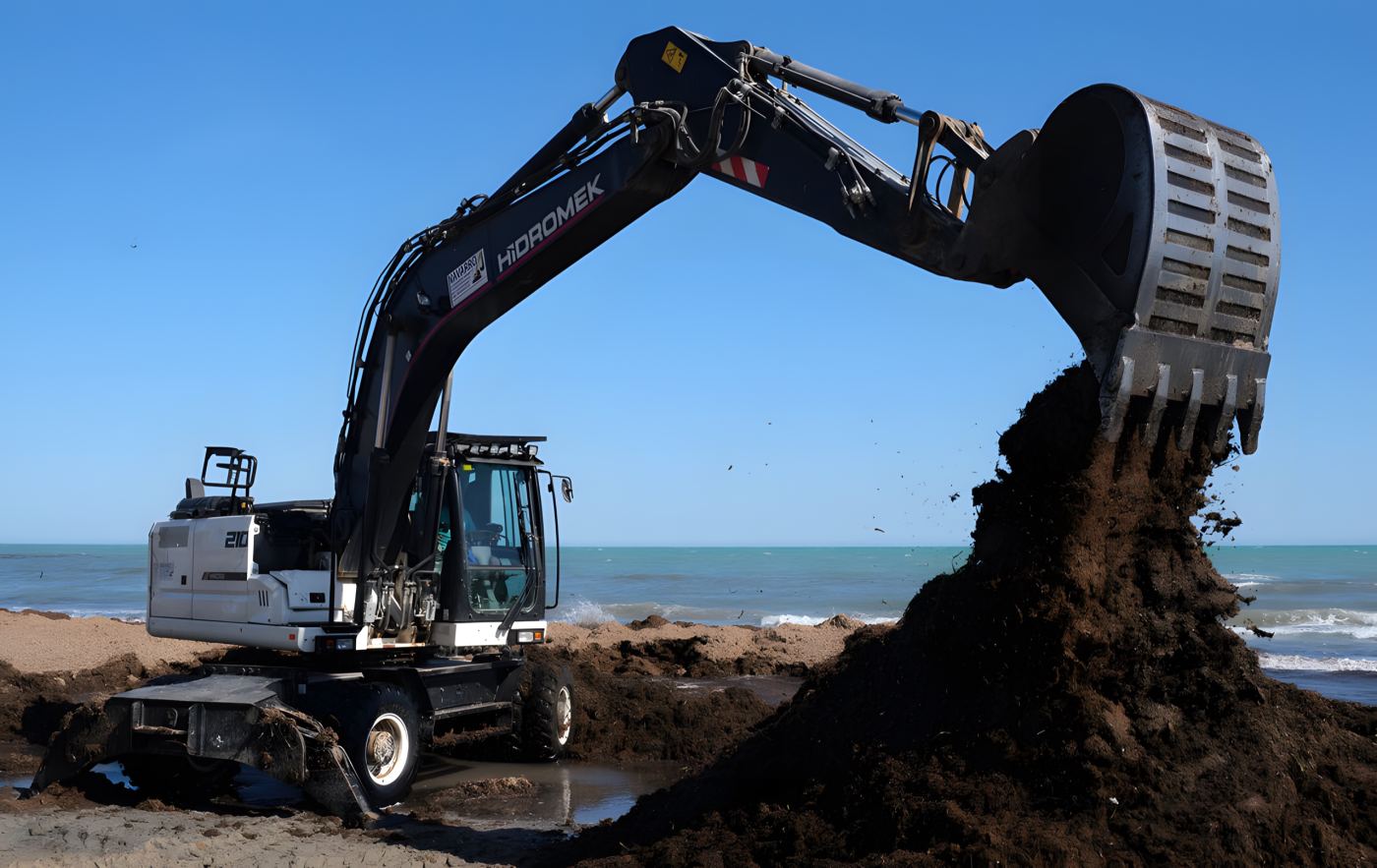
The machine with the articulated arm and bucket, on tracks or wheels. It digs, loads, demolishes and, with a change of attachment, crushes, cuts or grabs. It is the most versatile machine on site, and the first to arrive.
An excavator is a heavy machine used on construction sites to perform a variety of excavation and earth-moving tasks. Essential in many construction and demolition operations, it is equipped with an articulated arm, a bucket for digging, and a system of tracks or wheels for mobility. Due to its versatility, it is used in a wide range of operations, including earth removal, foundation preparation, and structure demolition. Excavators are versatile and can be equipped with various attachments, such as hydraulic hammers for demolition, clamps for handling materials, augers for drilling, and buckets of various shapes and sizes.Safety is paramount when using excavators; operators must be adequately trained and certified, following strict safety procedures to prevent accidents. Regular maintenance is crucial to ensure safe and efficient operation of the machine, including checks on key components like the hydraulic system, tracks or wheels, and lifting mechanisms.Origin and HistoryModern excavators are the result of the evolution of more primitive earth-moving machines, used since the industrial era. With the introduction of hydraulic systems in the 20th century, excavators gained precision and power, becoming indispensable tools in construction and demolition. Today, they are designed with advanced technologies to improve efficiency and safety.TypesThere are various types of excavators, each designed for specific site needs:Crawler Excavators: Equipped with tracks, ideal for difficult and uneven terrain, offering greater stability and traction.Wheeled Excavators: Use wheels instead of tracks, suitable for flat terrain, providing faster mobility.Mini Excavators: Smaller in size, ideal for tight spaces or light excavation tasks, commonly used in residential or urban projects.Long Reach Excavators: Equipped with a longer arm for deep excavation or demolition of tall buildings.Hydraulic Excavators: Use a hydraulic system for arm and bucket movement, offering precision and power for excavation and lifting.SymbolismThe excavator symbolizes power and versatility. It is a tool that allows for "shaping" the land, enabling the construction of fundamental infrastructure such as roads, buildings, and foundations, representing the base of modern construction.Interesting FactsExcavators can be equipped with various attachments, such as hydraulic hammers for demolition, clamps for handling materials, augers for drilling, and buckets of different shapes and sizes to suit specific excavation tasks.
- Origin
- Evolved from industrial earth-moving machines, modernized with hydraulic systems
- Category
- Machine for excavation and earth-moving
- Function
- Excavating, removing earth, demolition
- Presence on Construction Sites
- Essential for earth-moving and demolition