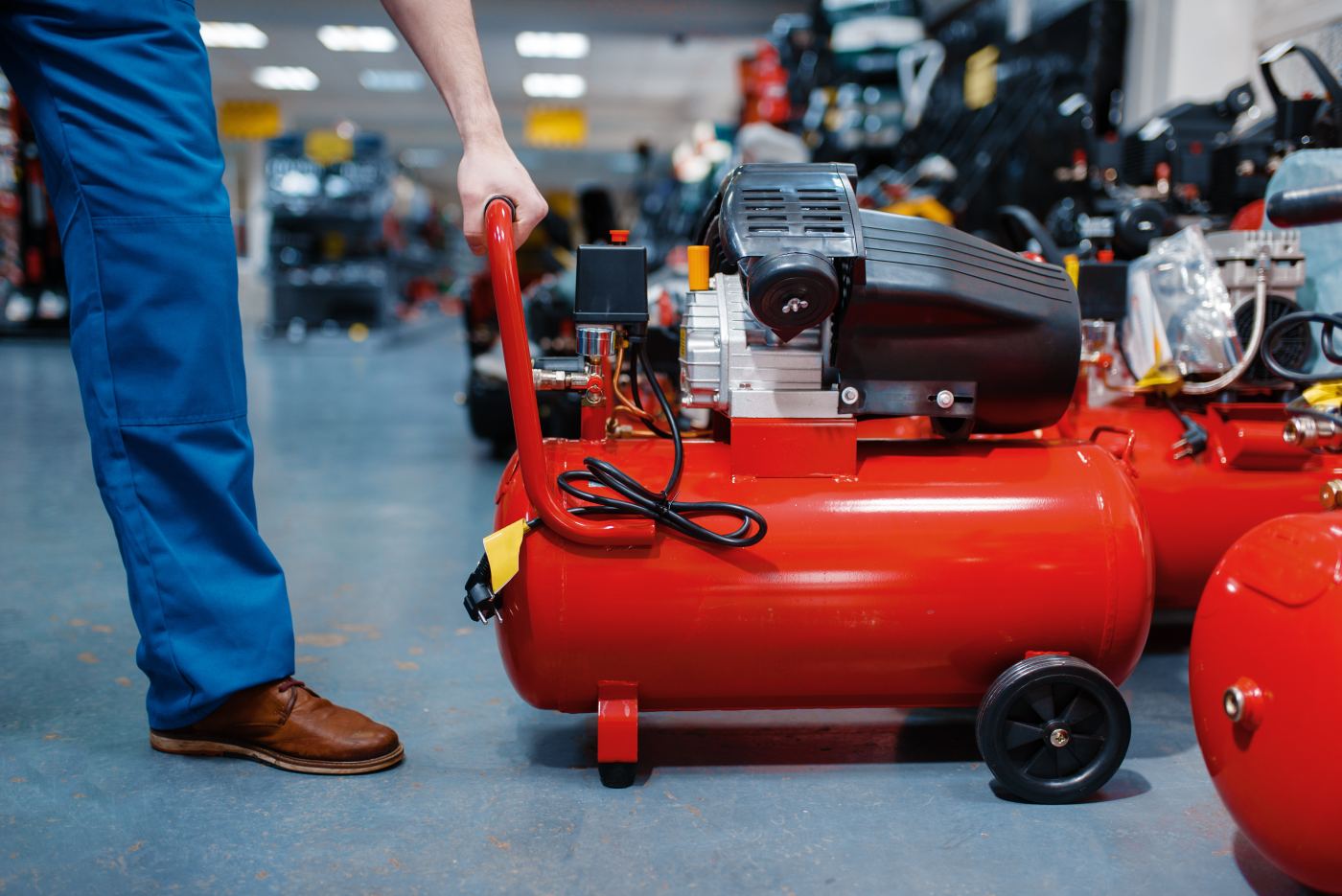
Air Compressor
An air compressor is an operating machine that raises gas (air) pressure by converting mechanical energy—supplied by a thermal or electric engine—into potential energy stored as compressed air. On a construction site, compressed air acts as a "fourth utility" (after electricity, water, and fuel), powering pneumatic technology that offers a superior power-to-weight ratio compared to traditional electric systems.
Origins and History
While the use of compressed air has ancient roots (bellows for smelting), the modern compressor was born during the Industrial Revolution. The defining breakthrough occurred in 1888, when engineer Viktor Popp established the first urban compressed air distribution network in Paris to power clocks and small machinery. In construction, the turning point was the invention of the pneumatic hammer by Charles Brady King in 1892. However, it was not until the 1950s that the rotary screw compressor gained traction, thanks to patents by Sweden’s Alf Lysholm, enabling continuous, steady airflow and replacing noisy, bulky piston models in large infrastructure projects.
Types
In professional and construction settings, compressors are distinguished by their compression principle:
- Reciprocating Piston Compressors: Use one or more cylinders to compress air. They are robust and suited for intermittent use, very common in small sites and workshops.
- Rotary Screw Compressors: Based on two counter-rotating helical rotors. They are the standard for large sites due to their ability to run at a 100% duty cycle with constant airflow and fewer vibrations.
- Engine-Driven Compressors (Portable): Diesel-powered mobile units mounted on trailers, independent of the electrical grid, and essential for roadwork and heavy demolition.
- Air Treatment Systems: Include dryers and condensate separators, vital for preventing air moisture from oxidizing the internal mechanisms of pneumatic tools.
Symbolism
- The air compressor symbolizes invisible energy and pneumatic force.
- It represents the transformation of air (an ethereal element) into a powerful blast capable of shattering rock.
- On a site, the rhythmic hum of the compressor is the emblem of constructive dynamism: it is the "lung" that breathes life into tools, allowing the worker to multiply their physical strength through concentrated atmospheric pressure.
Interesting Facts
- Condensate Management: Compressing air causes ambient moisture to condense into water. If not regularly drained from the tank, this water takes up valuable storage space and can cause "water hammer" in tools or, in winter, valve freezing.
- Thermal Efficiency: About 90% of the energy used by a compressor turns into heat. In large industrial plants, this heat is often recovered to provide hot water or heat the workspace itself.