Thermal Insulation
Insulation refers to the suite of techniques used to decouple two systems with different environmental conditions, preventing the exchange of heat or sound. In construction, this is achieved by interposing specific materials—often in the form of rigid boards or batts—that inhibit thermal conductivity (External Thermal Insulation Composite Systems, or ETICS) or dampen mechanical vibrations and airborne noise.
Insulation plays a vital role in industrial processes and civil engineering, driven by increasingly stringent energy efficiency criteria during the design, construction, and management phases. In Europe, these standards were formalized by Directive 2002/91/EC on the energy performance of buildings.
Origin and History
The term roots back to the Latin cohibere ("to restrain"). It evolved from the archaic use of natural materials such as hides, straw, and cork. While the Greeks and Romans utilized cavity walls for air insulation, the industrial revolution and the 1940s invention of synthetic polymers marked a turning point. However, it was the 1970s energy crisis that transformed insulation into a modern engineering standard, establishing the "thermal envelope" as a global necessity for energy conservation and sustainability.
Types
Insulation methods are primarily categorized by the placement of the insulating layer relative to the building’s envelope:
- External Insulation (ETICS): The most effective solution, as it wraps the building to eliminate thermal bridges and protect the masonry from thermal stress.
- Internal Insulation: Involves applying panels or drywall linings to interior surfaces. It is ideal for heritage buildings or single units, though it slightly reduces the net internal floor area.
- Cavity Wall Insulation (In-situ Injection): Consists of filling the "air gap" within double-leaf walls with loose-fill materials like cellulose flakes or mineral wool.
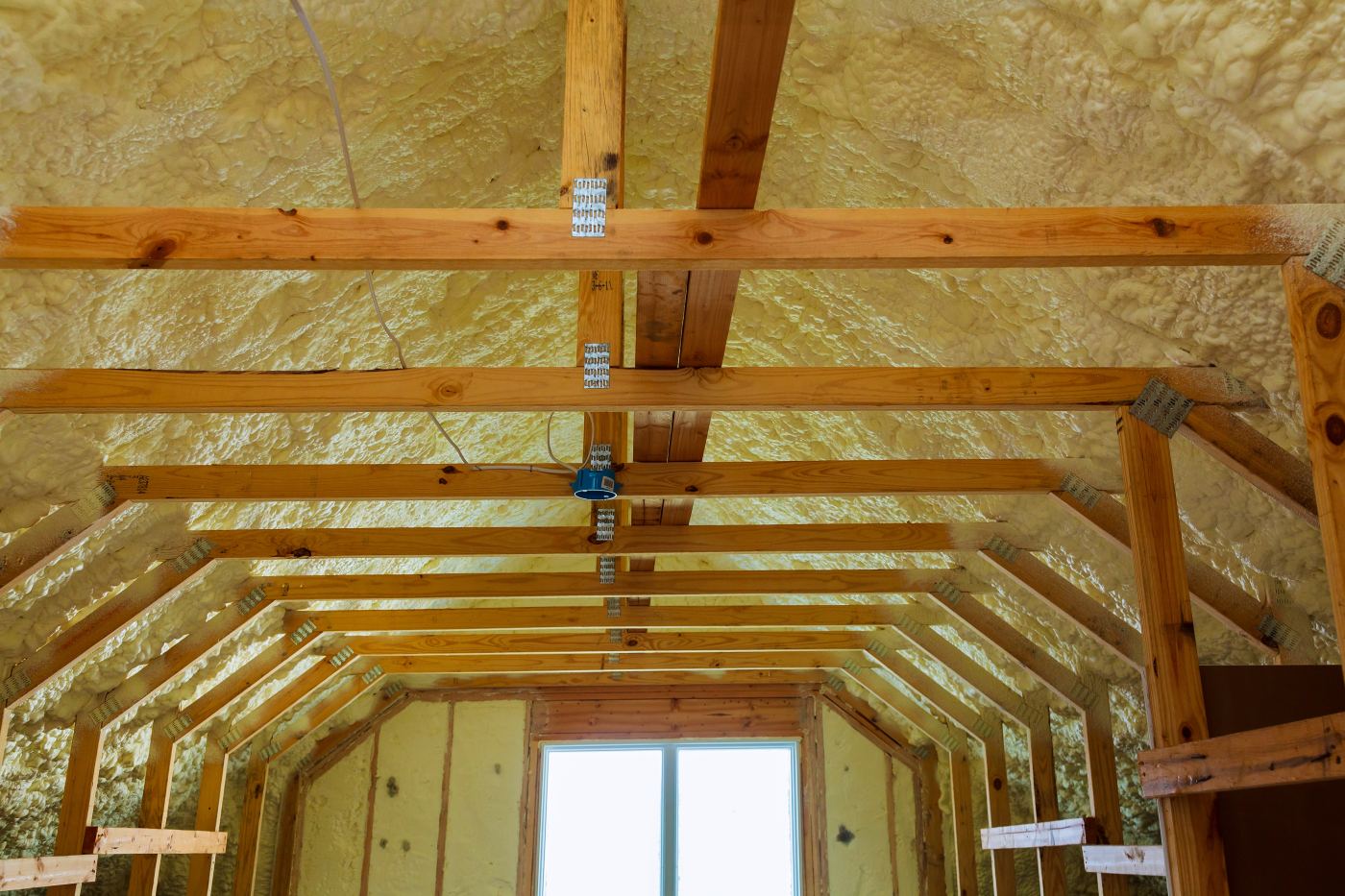
- Horizontal Insulation: Focused on lofts, attics, and roofing systems. This is critical for mitigating heat loss through convection, as warm air naturally rises.
Symbolism
In a more abstract sense, insulation represents the archetype of protection and the preservation of essentials, evoking the psychological concept of a "boundary" between the self and the world. Like a membrane that filters exchanges without total hermetic sealing, it symbolizes the ability to safeguard internal "warmth"—vital energy and well-being—from an often hostile environment. This invisible "cloak" reflects resilience and autonomy, where efficiency is not merely financial but an act of respect toward resources.
Curiosità
- Biomimicry**:** Nature was the first "insulation engineer." The structure of bird feathers and polar bear fur, which trap microscopic air pockets, serves as the biological blueprint for modern synthetic materials.
- Space-Age Tech: Aerogel, developed for NASA, is composed of 99.8% air. Nicknamed "frozen smoke," it is the world's lightest solid insulator, capable of shielding a flower from the direct heat of a flame.
- Ancient Bio-building**:** In Scandinavia, birch bark was traditionally paired with sod to create green roofs. This demonstrates that modern sustainable architecture is often a return to millenary techniques of ecological integration.
- Origin
- Further developed in the 1970s
- Category
- Thermal and acoustic insulation techniques
- Function
- To increase comfort and reduce energy costs
- Presence on Construction Sites
- Essential in new buildings and renovations to optimize energy efficiency