Concrete
The material made by mixing cement, water, sand and gravel. It does not dry: it hardens through a chemical reaction with the water, and keeps gaining strength for weeks. With steel bars inside it becomes reinforced concrete.
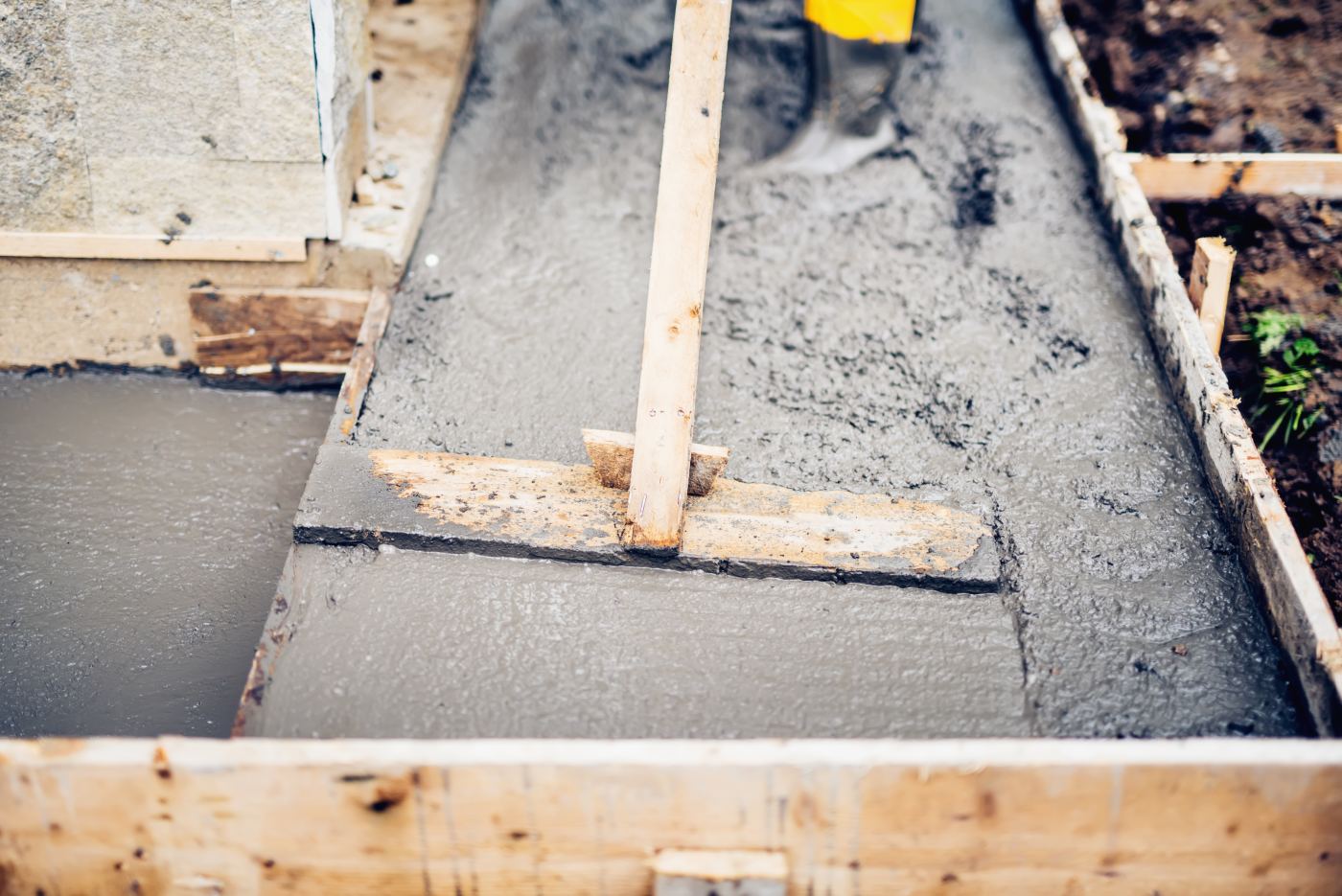
Concrete is a composite construction material widely used for its strength and durability. It is made from a mixture of cement, water, aggregates (such as sand, gravel, or crushed stone) and, in some cases, chemical additives that enhance specific properties of the mixture. Once mixed, concrete is poured into molds or formwork, where it hardens and takes the desired shape. The hardening process of concrete is known as hydration: water reacts with cement, forming crystals that bind the aggregates together, creating a solid and strong mass. This process continues over time, further improving the material’s mechanical properties.
Concrete is highly versatile and can be used in a wide range of applications, from building foundations to bridges, roads, and dams. It is particularly valued for its ability to be shaped into almost any form before hardening, its high compressive strength, and its long-term durability.
The use of concrete requires specific expertise, as the proportions of ingredients, mixing conditions, and placement timing significantly affect the final properties of the material. Proper management of these factors is essential to ensure that concrete structures are safe, strong, and durable.
Origin and HistoryConcrete has been used since ancient times, with the ancient Romans perfecting a primitive form of concrete for building aqueducts, roads, and other structures. Over time, the technique was refined, particularly in the 19th century with the introduction of Portland cement, leading to the modern concrete we use today, which has become one of the most widely used materials in construction.TypesThere are several types of concrete used in construction, each with specific characteristics depending on the uses and requirements of the project. The main types include:High-strength concrete: Has a strength greater than 50 MPa, used for skyscrapers, bridges, and heavy structures.Reinforced concrete: Contains steel bars for tensile strength, used in load-bearing structures such as pillars and beams.Prestressed concrete: The steel bars are pre-stressed, ideal for bridges and flooring that require high load-bearing capacity.Lightweight concrete: Uses lightweight aggregates, reducing weight, suitable for non-load-bearing roofs and floors.High-durability concrete: Resistant to extreme environmental conditions, such as corrosion and humidity, for structures in aggressive environments.Self-compacting concrete (SCC): Fluid and without the need for vibration, used for complex or hard-to-reach structures.Polymer concrete: With polymer binder, offers chemical and thermal resistance, ideal for extreme environments.Transparent concrete: Contains optical fibers to transmit light, used in decorative applications.Eco-friendly concrete: Made with recycled materials, reduces environmental impact, ideal for sustainable projects.SymbolismConcrete symbolizes solidity and durability. It is the material that has made possible the construction of many modern structures, such as skyscrapers and bridges, representing the foundation and heart of civil engineering.Interesting FactsThe hardening process of concrete, known as hydration, continues even after the material has been poured, gradually improving its mechanical properties over time. This gives it a strength that increases progressively, making it particularly resilient in the long term.
- Origin
- Ancient, perfected with Portland cement in the 19th century
- Category
- Composite material
- Function
- Essential for building resilient structures
- Presence on Construction Sites
- Foundations, floors, roads, bridges