Reinforcement
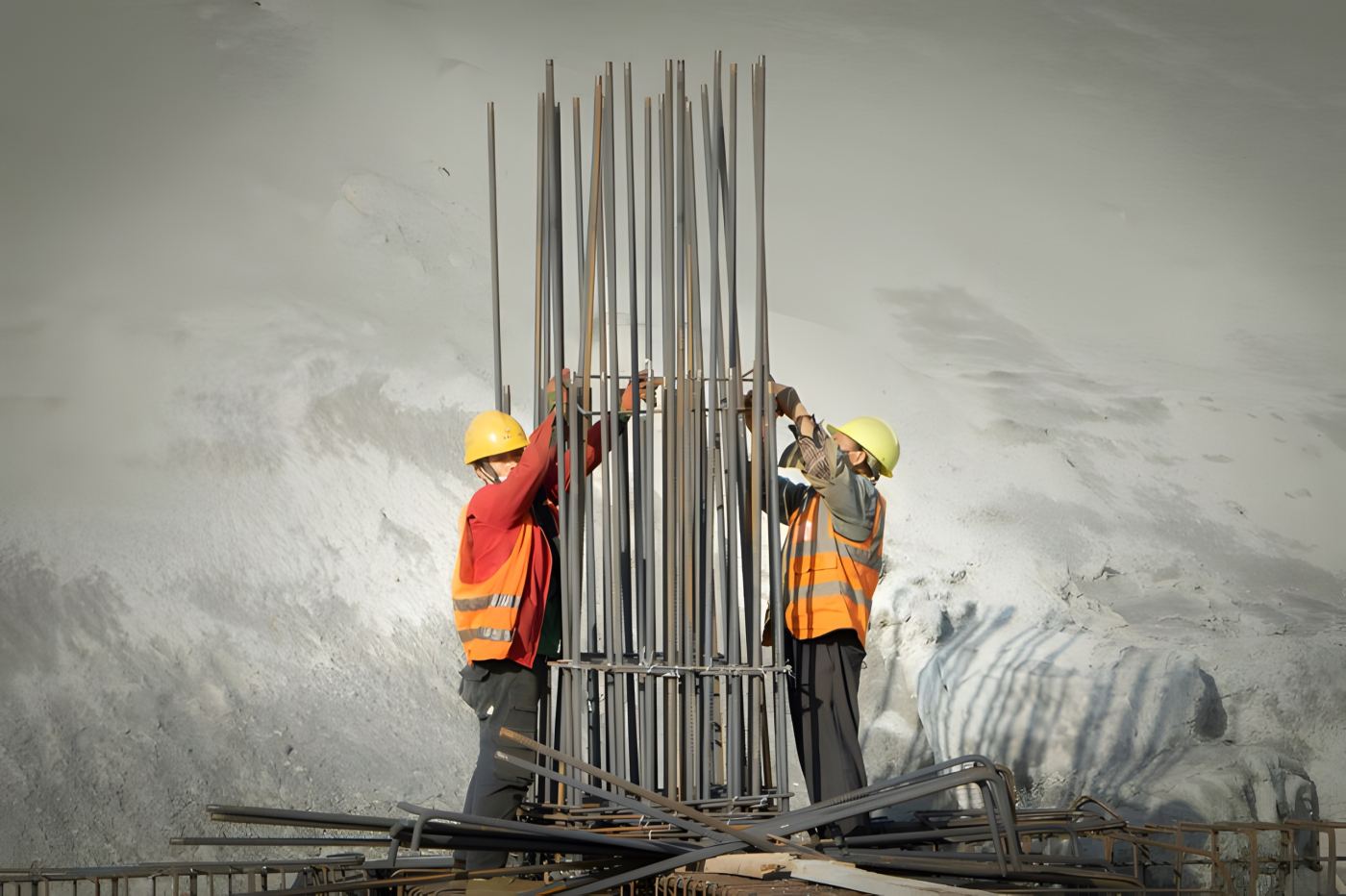
The steel bars embedded in concrete. Concrete is strong in compression but weak in tension: the steel does that job. The bars are tied into cages and placed in the formwork before the pour.
Reinforcement in the construction field refers to the set of resistant elements, generally made of steel, placed inside concrete to absorb tensile stresses and increase its load-bearing capacity. Concrete has high compressive strength but is weak in tension, which makes the integration of ductile materials necessary.Reinforcement consists of deformed steel bars, welded wire meshes, stirrups, and ties, properly shaped and assembled. The layout of the reinforcement is defined by the structural design, based on loads, stresses, and service conditions. It is placed inside the formwork before the concrete is poured. Proper concrete cover is essential to ensure durability and to protect the steel from corrosion.Reinforcement works in synergy with concrete thanks to the mechanical bond between the two materials. It is used in structural elements such as beams, columns, slabs, foundations, and shear walls. Incorrect installation can compromise the structural safety of the work. Reinforcement also helps control cracking caused by shrinkage and thermal variations. In more complex projects, special or prestressed reinforcement may be used. Compliance with technical construction standards (NTC) is mandatory. Execution requires qualified personnel and on-site inspections. The quality of reinforcement directly affects the strength, durability, and reliability of the structure. For this reason, it represents a key element in reinforced concrete construction.Origin and HistoryReinforced concrete reinforcement was developed in the 19th century, when it was recognized that concrete, although strong in compression, was weak in tension. The discovery of integrating steel into concrete revolutionized architecture and civil engineering, enabling the construction of stronger and more durable structures such as skyscrapers, bridges, and other complex infrastructures.TypesThere are several types of reinforcement, each with specific applications: Steel bars: The most common type, available in various sizes and shapes (round, square, etc.), with smooth or ribbed surfaces to improve bonding with concrete.
Welded wire mesh: Made of a grid of steel bars welded together, used for floors, walls, and other flat surfaces.
Prestressed reinforcement: Used in prestressed concrete structures, where steel tendons are tensioned before concrete casting and then released to apply continuous compression.
Fiber reinforcement: Made from composite materials such as glass or carbon fibers, used where corrosion resistance is required.SymbolismIn the context of construction, reinforcement symbolizes strength, structure, and protection:It is the hidden element that gives concrete its strength, representing the invisible solidity on which the entire structure rests. Symbolically, it evokes the idea that every building, in order to be durable, needs a strong technical foundation, even if it is not always visible. In a broader sense, reinforcement also represents prevention and safety: just as a skeleton supports the body, reinforcement supports the building, ensuring stability over time and the ability to withstand stress.Interesting FactsReinforcement not only improves the load-bearing capacity of concrete structures but also protects them from mechanical and chemical damage.Fiber reinforcements, such as glass or carbon fiber, are particularly used in corrosive environments where steel could deteriorate.
- Origin
- Developed in the 19th century
- Category
- Structural element for reinforced concrete
- Function
- To increase the strength and durability of concrete
- Presence on Construction Sites
- Essential for constructing reinforced concrete structures