2026-05-25 • Youmarell
BlogContemporary real estate management requires a paradigm shift that moves beyond the logic of emergency intervention in favor of rigorous, multidisciplinary programming. In this context, maintenance must no longer be perceived as a mere financial burden but as a strategic investment aimed at safeguarding asset value, protecting occupant safety, and ensuring the operational continuity of the activities taking place within the built environment. The intrinsic complexity of modern buildings, characterized by a dense interconnection between structural components, technological systems, and stringent regulatory requirements, dictates an analytical approach that allows for the preemptive identification of critical issues and the mitigation of risks associated with natural deterioration or functional obsolescence.
The effectiveness of a maintenance plan is measured by its ability to drastically reduce operational downtime and prevent the occurrence of non-compliance that could expose the property to serious civil and criminal penalties. The indispensable starting point for every industry professional lies in a systematic analysis of the current state of the building, beginning with its structural solidity. Verifying the stability of load-bearing structures, with particular focus on seismic vulnerability and the degradation of materials such as reinforced concrete or steel frameworks, constitutes the pillar upon which the entire safety of the building rests. Constantly monitoring cracking patterns, corrosion phenomena, or leaks that could compromise the integrity of the structural frame is an activity that allows no exceptions, especially in a geologically complex territory.
Parallel to the structural component, fire prevention occupies a central role in the hierarchy of management priorities. A truly efficient fire safety system is not limited to the presence of compliant extinguishing devices but requires detailed control of space compartmentalization, the functionality of escape routes, and the efficiency of detection and smoke extraction systems. The maintenance of fire protection systems, both active and passive, must follow rigorous protocols that guarantee timely intervention in case of need, minimizing the probability of irreparable damage to people and property. Compliance with current technical standards and the constant updating of the Fire Safety Register are elements that define professional management and the responsibility of the employer or property owner.
Closely related to fire safety is the management of electrical systems and earthing systems. The very nature of electrical energy involves intrinsic risks related to overloads, short circuits, or leakages that can trigger fires or cause electrocution. A periodic check of insulation integrity, the correct sizing of circuit breakers, and the functionality of the earthing system is fundamental not only for compliance with workplace safety regulations but also for ensuring that all the building's technological systems receive a stable and secure power supply, preventing sudden failures in machinery or IT systems that would paralyze productive or administrative activities.
No less relevant is the aspect related to thermal and air conditioning systems, which heavily impact the energy balance and the thermo-hygrometric well-being of indoor environments. Accurate ordinary maintenance of boilers, heat pumps, and air handling units ensures the maintenance of design performance, avoiding unjustified increases in consumption and ensuring indoor air quality. In this field, the prevention of biological risks, such as those linked to the proliferation of Legionella bacteria in water circuits and cooling systems, becomes an absolute health priority. Cleaning filters, sanitizing ducts, and monitoring domestic water storage temperatures are operations that must be integrated into a holistic vision of building maintenance to protect public health.
A further critical element is represented by vertical transport systems, such as elevators and escalators. These systems, subject to intensive use and rigid periodic inspection regimes by notified bodies, require preventive maintenance that goes beyond simple lubrication of mechanical parts. The safety of the end user depends on the perfect functionality of locking systems, speed governors, and emergency communication. Proactive management of these components allows for the minimization of system shutdowns, which in residential or commercial contexts represent one of the major inconveniences perceived by users and a potential risk factor in the event of an evacuation.
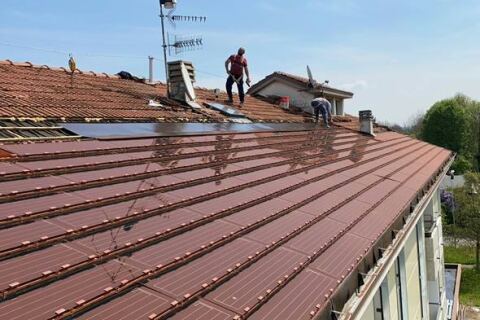
Moving towards the top of the building, attention must shift to the safety of roofs and the installation of fall protection systems, such as life lines. Maintenance of the roof and rainwater disposal systems is essential to prevent leaks that, if neglected, could damage structural elements and interior finishes. Furthermore, the obligation to guarantee safe access for subsequent maintenance interventions makes it essential to verify the integrity of anchors and the collective or individual protection devices installed. Neglecting the maintenance of the roofing membrane or high-altitude safety systems exposes the property to significant legal risks in the event of accidents during work activities on the roof.
A topic of increasing importance in the redevelopment and maintenance of existing buildings concerns the management of hazardous materials, with particular reference to asbestos and synthetic vitreous fibers. The presence of asbestos-containing substances in friable or compact matrices requires precise mapping and a monitoring plan for the state of conservation. Where degradation phenomena are found, it is necessary to intervene with confinement, encapsulation, or removal procedures carried out by specialized personnel. Correct management of these environmental risks is a fundamental prerequisite for regulatory compliance and for the valuation of the property in today's real estate market, which is increasingly attentive to sustainability and health parameters.
Technological evolution now provides digital tools that revolutionize the way maintenance is understood. The adoption of a digital Building Logbook or the use of Building Information Modeling platforms for the operational phase (BIM to FM) allows for the centralization of all technical information, regulatory deadlines, and the history of interventions carried out. This digitalization of documentary processes reduces the risk of losing vital data and allows for more accurate financial planning of extraordinary maintenance interventions. Having a clear and immediately accessible view of the entire building-plant system means being able to make decisions based on objective data, optimizing available resources and improving overall efficiency.
In conclusion, the reduction of risks and downtime necessarily passes through an integrated vision that brings together different technical skills. The creation of a culture of preventive maintenance, supported by rigorous checklists and constant monitoring, represents the only viable path to ensure that buildings remain safe, efficient, and compliant over time. Professionals and clients must collaborate to transform technical management from a series of fragmented interventions into a continuous process of improvement, capable of responding to the challenges posed by technological innovation and the increasing safety needs of contemporary society.
2026-05-25 • Youmarell
Blog
2026-05-25 • Youmarell
News
2026-05-25 • Youmarell
Event
2026-05-25 • Youmarell
News