
2026-05-25 • Youmarell
NewsThe regulatory and jurisprudential landscape governing safety at construction sites in Italy continues to outline with increasing rigor the boundaries of responsibility for the professional figures involved. A recent and significant ruling by the Court of Cassation, sentence number 5222 of 2026, has offered new insights into the delicate balance between the Safety and Coordination Plan, commonly known as the PSC, and the Operational Safety Plan, or POS. This pronouncement is of particular interest to professionals in the sector as it clarifies when and to what extent the Safety Coordinator during the Execution phase, the CSE, can be held criminally liable for an accident occurring on site, moving beyond the concept of purely formal or bureaucratic supervision.
The analysis of the specific case addressed by the Supreme Court concerns a serious accident that occurred during the demolition of a reinforced concrete structure located at a height. The accident involved a worker who fell from a height due to the collapse of the structure on which he was operating. Investigations highlighted a series of documentary and operational deficiencies that led to the conviction not only of the employer of the executing company but also of the safety coordinator. The central issue raised by the judges concerns the effective consistency that must exist between the indications contained in the PSC, drafted by the coordinator, and those included in the POS, prepared by the employer to detail the specific operational methods of their company.
According to the provisions of Legislative Decree 81 of 2008, the execution coordinator has the fundamental task of verifying the suitability of the POS. This verification must not be limited to a superficial check of the presence of the document or its formal correctness but must translate into a merit-based examination of the congruence of the prevention measures with respect to the concrete risks identified in the coordination plan. In the case in point, the PSC correctly provided for the demolition of reinforced concrete structures even in elevated positions, indicating the use of mechanical means or manual demolition with specific precautions. However, the company's POS did not detail the collective protections necessary along the edges of the structure being worked on, limiting itself to generic indications that proved insufficient to prevent the operator's fall.
Jurisprudence reaffirms that the coordinator holds an autonomous guarantee position that stands alongside that of the employer. Although the CSE is not required to be constantly present on site to monitor every single action of the workers, they have the duty to exercise what is defined as high-level supervision. This function implies the duty to ensure that the safety design choices are effectively adopted and detailed in the operational plans of the companies. When the coordinator accepts a POS that is clearly deficient or inconsistent with the risks highlighted in the PSC, they fail in their duty of preventive control, becoming co-responsible for the consequences deriving from such an omission.
Another crucial aspect touched upon by the sentence concerns the power and duty to suspend work. The legislator grants the coordinator the power to interrupt activities in the presence of a serious and imminent danger directly observed. However, criminal liability can also arise if the danger was foreseeable through the analysis of the safety documents. If the POS does not provide for adequate protection for an already scheduled dangerous task, the CSE has the obligation to request its integration before operations begin. The failure to request an adjustment to the operational plan constitutes a specific fault that causally links the professional's conduct to the harmful event.
The integration between PSC and POS must therefore not be considered a simple paper-based fulfillment or an administrative step between the professional and the company. Instead, it is the beating heart of safety management on site. The PSC serves as a general framework that analyzes interferences and environmental risks, while the POS must constitute the executive detail that applies those directives to the technological and organizational reality of the company. The coordinator acts as a hinge between these two dimensions, and their signature on the POS verification report certifies that this connection is solid and free of gray areas.
In conclusion, sentence 5222 of 2026 emphasizes that safety at work is built through a chain of responsibility in which every actor must perform their role with technical competence and a critical spirit. For the safety coordinator, this means not passively accepting the documents produced by companies, but subjecting them to rigorous scrutiny that takes into account the evolution of the work and the specificities of the production site. Only through a substantial verification of the consistency between coordination planning and company operations is it possible to drastically reduce the risk of accidents and, at the same time, protect the professional and legal position of the coordinator themselves.
2026-05-25 • Youmarell
News
2026-05-25 • Youmarell
News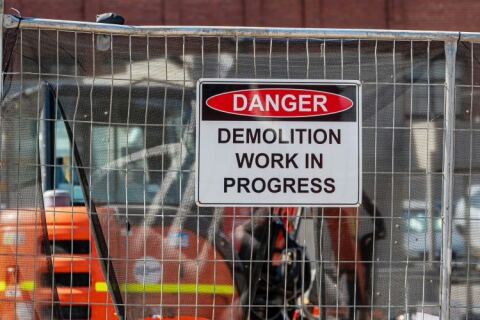
2026-05-25 • Youmarell
Blog
2026-05-25 • Youmarell
Blog