
2025-08-20 • Youmarell
NewsThe construction industry is undergoing rapid evolution, with significant transformations also taking place in critical infrastructure, ranging from data centers to healthcare facilities to airports. It’s no longer just about installing electrical systems, but about integrating smart systems, renewable energy, and advanced digital coordination. Electrical contractors have become the key players in creating the technological backbone of every building, addressing challenges related to labor shortages, rising costs, and sustainability expectations. In this context, understanding emerging trends is not only useful but essential.
Four technological trends are shaping the future of electrical construction: Building Information Modeling (BIM), prefabrication, smart tools and wearables, and clean energy. BIM has become a benchmark, allowing contractors to have a complete 3D view of every system before the project reaches the site, preventing errors, saving time, and money. Thanks to its precision, BIM enables the mapping of conduit paths and reduces additional work by integrating with planning and budgeting tools. Adopting it from the beginning of the project has become critical for effective coordination between teams.
Prefabrication is speeding up installations, turning construction sites into true assembly spaces, with components such as conduit racks, electrical panels, and lighting systems pre-assembled in controlled environments. This approach reduces delays caused by weather, costs, and waste, while increasing accuracy since components are built in a lab rather than the chaos of a job site. It is particularly advantageous for projects with repetitive layouts, such as hospitals and hotels, and allows smaller teams to complete larger and faster projects.
Smart tools and wearables are improving safety on construction sites. Helmets and belts equipped with advanced technology monitor various parameters, such as body temperature and proximity to hazards, providing real-time data to keep workers safe. Augmented reality glasses overlay schematics directly on the work surface, facilitating precise installations. Drones, meanwhile, are making inspections safer, more efficient, and accessible, helping reduce risks on the field.
The growing focus on clean energy is driving the sector toward new wiring and energy storage solutions, designing buildings that can operate autonomously through microgrids, lithium-ion battery banks, and smart inverters. Microgrid-ready wiring allows buildings to disconnect from the main grid during power outages, improving reliability and resilience. Electrical contractors must now be capable of integrating solar solutions, battery specifications, and energy management protocols for more efficient and sustainable projects.
In addition to these trends, cloud-based project management tools are improving communication between teams, making the construction process smoother and faster. Clients are also demanding the integration of eco-friendly solutions, such as low-voltage lighting, high-efficiency panels, and electric vehicle charging infrastructure. To meet these demands, contractors must understand green certifications and adapt to ever-evolving energy models, offering sustainable solutions at every stage of construction.
In conclusion, electrical construction is undergoing a major transformation due to the introduction of smart design tools, prefabrication, advanced safety technologies, and clean energy wiring solutions. The role of the electrician is shifting from simple installer to technological innovator, ready to address the new challenges of the industry. For those willing to learn, adapt, and lead the change, the future of electrical construction is filled with opportunities.
2025-08-20 • Youmarell
News
2026-05-25 • Youmarell
News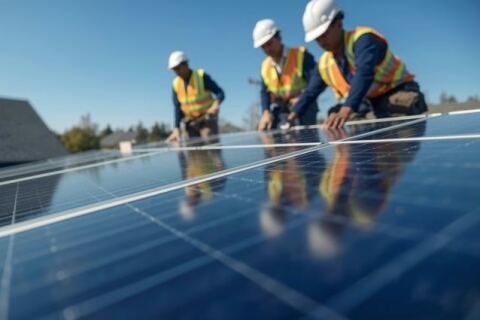
2026-05-25 • Youmarell
News
2026-05-25 • Youmarell
News