2026-07-24 • Youmarell
ArticleThe construction industry is experiencing significant growth, with a projected global increase of $4.2 trillion over the next 15 years. This growth presents an enormous opportunity but also faces a significant challenge: the skills gap. Indeed, compared to the previous year, vacancies in the industry have risen by 41%, driven by a growing wave of retirements and a labor market struggling to meet demand. In this context, artificial intelligence (AI) emerges as a powerful solution, ready to transform the way projects are designed, built, and managed, aiming to overcome existing challenges and accelerate the sector’s growth.
Currently, one of the major obstacles the construction industry faces is the existence of data silos. A 2024 survey revealed that workers spend as much as 18% of their time searching for information, and 43% believe that better access to data could significantly improve decision-making. The adoption of AI can bridge this gap by transforming raw data into useful and easily accessible information. By analyzing schedules, predicting risks, and optimizing resource allocation, AI not only improves operational efficiency but also makes the work environment more attractive to professionals, fostering a more agile and responsive management style.
AI is already proving its worth throughout the entire lifecycle of a construction project. In the pre-construction phase, it provides crucial support in feasibility studies, material optimization, and accurate cost estimation, reducing errors and speeding up the planning process. During the construction phase, AI enables real-time progress monitoring, along with predictive analysis that allows issues to be addressed before they arise. Additionally, advanced tools like Building Information Modeling (BIM) enable in-depth analysis of the building’s energy and structural performance. Even after project completion, AI continues to generate value through predictive maintenance planning, energy monitoring systems, and other technologies that optimize operational efficiency, reduce management costs, and promote sustainability.
The adoption of AI in the construction industry has been driven by several key factors. Firstly, growing cost pressures and labor shortages have made efficiency improvements indispensable. Furthermore, construction companies are looking to break down data silos to foster greater collaboration among teams and optimize project management. The growing accessibility of AI-based tools, once reserved for large companies, has made it possible for small and medium-sized businesses in the sector to implement the technology, leading to a democratization of technology that facilitates adoption.
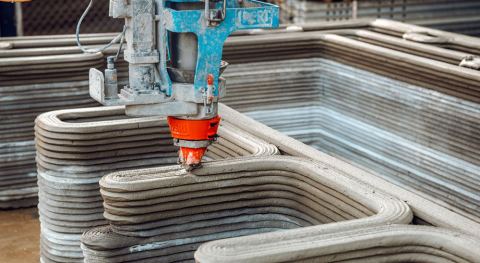
AI is also transforming how projects are managed, improving safety on construction sites, productivity, and the quality of work. By predicting potential risks and real-time monitoring of equipment performance, AI helps reduce workplace accidents and creates safer work environments. Additionally, with more accurate design processes and increased use of robotics and 3D modeling, AI improves construction quality, reduces errors and unexpected costs, and helps meet ambitious sustainability goals, reducing the industry’s environmental impact.
2026-07-24 • Youmarell
Article
2025-08-20 • Youmarell
News
2026-05-25 • Youmarell
Blog
2026-05-25 • Youmarell
News